
As global tensions escalate, concerns over the possibility of a nuclear conflict continue to grow. In this climate of uncertainty, does hope for the future remain?
The renowned Doomsday Clock is now set at 23:58:30, the closest it has ever been to ‘midnight’ in history.1 In the 1990s, many believed that history had effectively reached its conclusion with the collapse of the USSR and the triumph of liberal democracy. This was the argument presented by Francis Fukuyama in his 1992 book The End of History and the Last Man.2 At the time, the threat of nuclear war and the potential annihilation of humanity appeared to belong to the past. Yet, much has changed since then.
A brief history of modern times
The sequence of events began with the 2001 terrorist attack on the World Trade Center, followed by the U.S. invasions of Afghanistan and Iraq. In 2008, Russia launched a limited invasion of Georgia. The Arab world saw widespread protests in 2011, triggering civil wars in Libya, Syria, and Yemen. Then, in 2014, following Ukraine’s Revolution of Dignity, Russia annexed Crimea and established two puppet states in the Donbas. This was when the term Cold War 2.0 started gaining traction.3
In 2022, Russia launched a full-scale invasion of Ukraine, driving its relations with the West to an all-time low. Russian propaganda now openly threatens attacks on countries including Poland, a NATO member.4 Meanwhile, in October 2023, war broke out between Israel and Hamas, the governing authority in the Gaza Strip. The conflict risks drawing in the wider Middle East, including Iran, which could develop its first nuclear weapon within a few years.5 Israel, by comparison, is believed to possess at least 90 nuclear warheads.6
The possible near future
A conflict between China and the United States over Taiwan appears increasingly likely, with implications for other U.S. allies such as Japan. Some experts warn that China could invade Taiwan as soon as 2025.7 North Korea also remains a pressing concern, with its ongoing threats against South Korea. Meanwhile, the United States is deeply divided, and the upcoming presidential election, which could see Donald Trump return to office, may have significant global ramifications, influencing the actions of other major powers.8
Will the United States (NATO), Russia, China, and other major powers inevitably turn against one another in the near future? There is no way to know for certain. History, however, is unrelenting. As King Solomon wrote, ‘That which has been is what will be, that which is done is what will be done, and there is nothing new under the sun” (Ecclesiastes 1:9). This seems particularly true now, as the climate crisis and other global challenges increasingly intertwine into what some describe as a polycrisis.9 The result could be a series of local wars over resources, drawing in the very powers whose rivalry already shapes the world order.
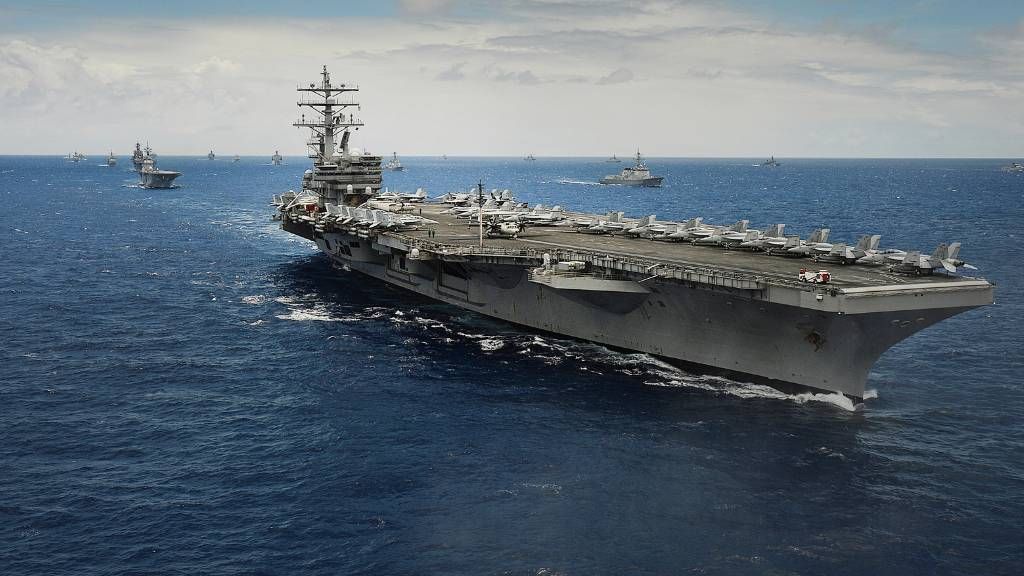
History (unfortunately) repeats itself
What is happening today, though previously confined to a smaller scale, now risks unfolding on a global level. In the past few centuries, at least two periods of war and revolution have led to millions of deaths.
Between 1789 and 1815, the French Revolution and the wars of revolutionary France were followed by Napoleon Bonaparte’s rule and the Napoleonic Wars, which claimed several million lives. Between 1914 and 1945, World War I led to the communist revolution in Russia and the collapse of several European monarchies, including Germany. This was followed by World War II,10 after Joseph Stalin and Adolf Hitler came to power, resulting in tens of millions of deaths.
Ninety-nine years of relative peace separated these two periods (1789–1815 and 1914–1945). This year marks 78 years since 1945, and soon it will be 80. Yet many world leaders today display the same belligerence seen before World War I. It may seem as though history is repeating itself. French political scientist Thérèse Delpech warned of this in her book Return of Barbarism in the 21st Century.11
Ideological thought is also coming full circle. History has shown how socio-political ideologies shape the world. Revolutionary French liberalism left its mark, followed over a century later by communism and fascism, particularly in Germany. Today, new forces are gaining ground, including environmentalism in response to the climate crisis and religious fanaticism amid growing secularisation. Time will reveal their impact.
Can World War III be prevented?
Is humanity truly doomed to suffer the consequences of nuclear war, climate disaster, and growing apocalyptic fears? Many hope not, believing that civilisation will endure for centuries or even millennia. Fortunately, experts and world leaders are making efforts to prevent another major war between global powers. These efforts include diplomatic negotiations between opposing sides and measures to address the worsening climate crisis, seeking to prevent further instability.12
The direction of global events seems set, though how it will unfold remains uncertain. Will we face World War III and the devastation of a nuclear winter? The leaders of major powers understand the consequences such a war would bring and will likely try to avoid nuclear confrontation for as long as possible. While this may seem reassuring, it also means that before turning to nuclear weapons, they will likely use every other military and economic tool at their disposal, which is hardly a comforting prospect.
Where can we find hope?
The possibility of World War III cannot be ignored. How can we remain hopeful in the face of such a threat? Reassuring ourselves with words like ‘Don’t worry!’ often feels empty. In reality, maintaining peace of mind and hope for the future requires something far greater. Such means do exist, though few seek them, as they demand unwavering faith. These will be explored in Part 2.
By the way, we recommend reading the articles:
- Earth – the Only Planet with Fire
- Geological Evidence for a Young Earth
- Ants: Complex Creatures
- Does TRAPPIST-1 Harbor Extraterrestrial Life?
- The Whale Pelvis: More Than Just a Vestige
- Are There Planets Better Suited for Life Than Earth?
- Does the Big Bang Theory Exclude the Existence of God?
Footnotes
- Spinazze, G., ‘PRESS RELEASE: Doomsday Clock set at 90 seconds to midnight’, Bulletin of the Atomic Scientists, 24 January 2023, available at: https://thebulletin.org/2023/01/press-release-doomsday-clock-set-at-90-seconds-to-midnight/
- Fukuyama, F., Koniec historii i ostatni człowiek, Znak Publishing, 2017.
- Wintour, P. et al., ‘Cold war 2.0: how Russia and the west reheated a historic struggle’, The Guardian, 24 October 2016, available at: https://www.theguardian.com/world/2016/oct/24/cold-war-20-how-russia-and-the-west-reheated-a-historic-struggle
- Nowak, K., ‘Miedwiediew threatens Poland with loss of statehood. Russia will treat us as a “dangerous enemy”’, Forsal.pl, 3 November 2023, available at: https://forsal.pl/swiat/rosja/artykuly/9337443,miedwiediew-grozi-polsce-utrata-panstwowosci-rosja-bedzie-nas-traktow.html
- Boehmer, D.-D., ‘This will mean one thing: a new war. Iran is approaching a critical point. The West has feared this threat for years’, Onet, 8 March 2023, available at: https://wiadomosci.onet.pl/swiat/bliski-wschod-na-skraju-wojny-niepokojace-glosy-z-teheranu/lcqj7jz
- Arms Control Association, ‘Nuclear Weapons: Who Has What at a Glance’, available at: https://www.armscontrol.org/factsheets/Nuclearweaponswhohaswhat
- Davidson, H. & Borger, J., ‘China could mount full-scale invasion by 2025, Taiwan defence minister says’, The Guardian, 6 October 2021, available at: https://www.theguardian.com/world/2021/oct/06/biden-says-he-and-chinas-xi-have-agreed-to-abide-by-taiwan-agreement
- Kucharczyk, M., ‘“The Economist”: Donald Trump największym zagrożeniem dla świata w 2024 roku’, Interia, 24 November 2023, available at: https://wydarzenia.interia.pl/raport-media-zagraniczne/news-the-economist-donald-trump-najwiekszym-zagrozeniem-dla-swiat,nId,7162845
- World Economic Forum, ‘The Global Risks Report 2023: 18th Edition’, p. 57, January 2023, available at: https://www.weforum.org/reports/global-risks-report-2023/
- Some historians argue that the period from 1914 to 1945 should be called the Second Thirty Years’ War, referring to the war of 1618–1648, which also claimed millions of lives.
- Delpech, T., Powrót barbarzyństwa w XXI wieku, Nadir Publishing, Warsaw, 2008.
- Saffari, A. et al., ‘A Rapid Energy Transformation Is Good for Nature and the Climate’, Boston Consulting Group, 7 November 2023, available at: https://www.bcg.com/publications/2023/rapid-energy-transformation-benefits-nature-and-climate
- Dobrer, J., ‘Why There Will Be No Nuclear War’, Fullerton Observer, 16 February 2023, available at: https://fullertonobserver.com/2023/02/16/why-there-will-be-no-nuclear-war/
© Source of main image: Canva.

The portal EvolutionOfThinking.org, created by the Research and Education Institute, focuses on education and the dissemination of knowledge related to research on various aspects of human well-being.

