
‘Wisdom calls aloud outside; She raises her voice in the open squares. She cries out in the chief concourses, At the openings of the gates in the city She speaks her words.’1 Wisdom is a gift, and only when it is used can it become a blessing to others. Thanks to the efforts of countless tireless minds throughout history, we now benefit from an abundance of scientific research and modern technology, advancements that not only enhance our comfort but, in many cases, preserve life itself.
Introduction
‘Physical medicine involves the application of physical methods for therapeutic, preventive, and diagnostic purposes. It remains closely connected with theoretical and clinical disciplines of medicine as well as with many fields of physics, technology, and natural sciences.’2 Today, we shall take a closer look at the electrotherapy method developed by the Polish scientist Viktor Zenni. Before doing so, it is important to first understand the fundamental principles of physical therapy.
Physical therapy
Types of physical therapy include:
- Thermotherapy – treatment with heat,
- Light therapy – the use of visible, invisible, ultraviolet, and infrared light rays (e.g., laser) as well as heliotherapy – treatment with sunlight,
- Electrotherapy – stimulation of tissues with direct and biodynamic currents,
- High-frequency currents, e.g., long- and short-wave diathermy as well as microwaves,
- Ultrasound therapy – treatment with mechanical vibrations,
- Kinesiotherapy – treatment with movement using therapeutic gymnastics, active, and passive exercises,
- Hydrotherapy – the application of water in the form of treatments (hydrothermal procedures) as well as exercises in water (hydrokinetic exercises)3.
Electricity
Electricity is all around us, and as a society, we are heavily reliant on it. But what exactly is electricity, and what potential health benefits might it offer?
Electricity is the organised movement of electric charges under the influence of an electric field.4 The intensity of the current is expressed in amperes (A). In electrotherapy, currents with low values from a few to several dozen milliamperes (mA) are used. Electrical stimulation employs both direct and alternating currents. The value of direct current does not change over time, so the direction and flow of electric charges remain constant. The value of alternating currents depends on time. The values of the signal repeat at specific intervals and are expressed in frequency in hertz (Hz), describing the number of such repetitions per second.
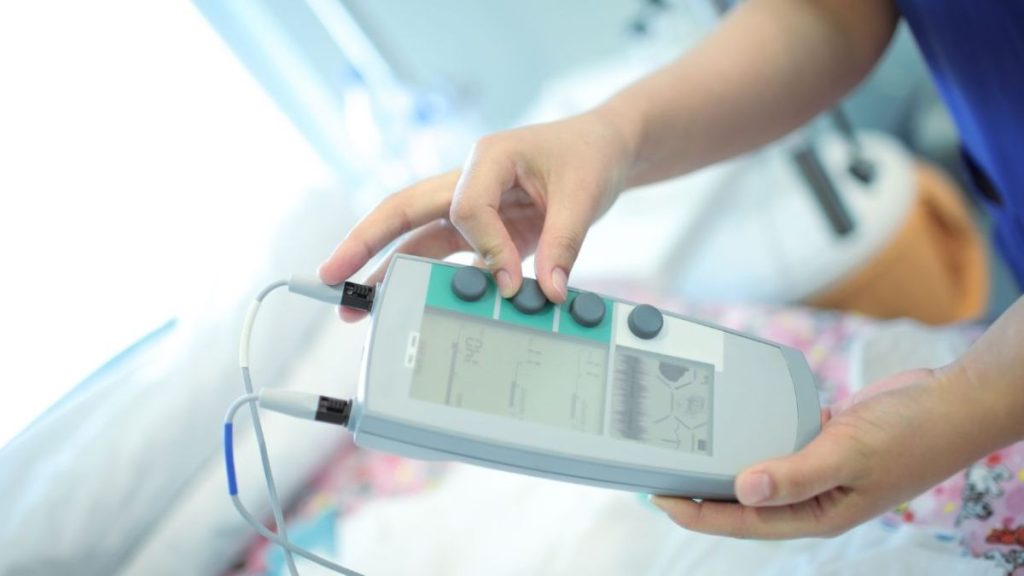
The Zenni Method mainly relies on the action of direct current, i.e., galvanic, and two types of diadynamic currents (MF and CP).
The history of electrotherapy
The therapeutic properties of electricity have been studied since ancient times. It was primarily sourced from fish (electric eel, torpedo ray, and Nile electric catfish). Both Egyptian and Greek scientists and physicians discovered the analgesic effects of these fish. Research shows that the analgesic properties (pain elimination) of these fish are comparable to artificial methods of electrical analgesia.
A major breakthrough occurred in 1663 when German inventor Otto von Guericke created the first electrostatic machine. The first physician to use artificial electricity in medicine was the German Christian Kratzenstein. Over time, many new enthusiasts of electrotherapy emerged, including Jean-Paul Marat, who discovered therapeutic effects of electrotherapy in treating paralysis, hemiplegia, rheumatism, and other conditions.
The first device for muscle electrostimulation was described in a sanatorium in Battle Creek. Over time, the pain-relieving effect of electricity was adopted in dentistry and surgery (e.g., during childbirth and limb amputations). In the 20th century, the impact of electrostimulation on the brain and the cervical spine began to be studied. Numerous successes were achieved in treating lumbago, sciatica, postherpetic neuralgia, and painful facial spasms.5
The Zenni Method
The effectiveness of the Zenni Method is rooted in the concept of the body’s electromagnetic field. Every cell requires continuous bioelectric stimulation to function correctly. The transmission of electrical impulses is vital to the body’s overall operation. Electromotive forces support the activity of internal organs and their systems, enabling essential processes such as ion exchange between cells, blood circulation, and metabolism.
The sodium-potassium pump consumes two-thirds of the cell’s energy. When an electric signal is disrupted, the body begins to fall ill. Through stimulation of the appropriate organs, it is possible to improve electrochemical processes in the body, such as those between the brain and endocrine glands.
The Zenni Method uses three types of currents: galvanic, MF, and CP. These currents have various properties, such as stimulating the central nervous and immune systems, normalizing hormone secretion, stimulating the work of internal organs and endocrine glands, as well as the reproductive system. Additionally, they reduce skeletal muscle tension, dilate blood vessels, and have analgesic effects.
Through increased activity, the body initiates self-repair processes, resulting in remarkable therapeutic effects. The greatest successes have been achieved by Dr. Zenni in the treatment of thyroid diseases (hyperthyroidism, hypothyroidism, Graves’ disease, Hashimoto’s thyroiditis, thyroid nodules), prostate hypertrophy, depression, eye diseases, cystic disorders, infertility, joint diseases, and many others.
Conclusion
‘Wisdom calls aloud outside; She raises her voice in the open squares. She cries out in the chief concourses, At the openings of the gates in the city She speaks her words’ – these ancient words gain new meaning when we look at the evolution of medicine and physical therapy. In the world of modern science, the Zenni electrotherapy method represents a fascinating synthesis of past wisdom and innovative discoveries.
Electrotherapy, which has its origins in antiquity, evolved through the efforts of dedicated researchers and inventors who investigated the therapeutic potential of electricity. As a result of their work, we now have access to advanced electrotherapeutic technologies that not only alleviate pain but also promote the body’s regenerative processes.
The Zenni Method, based on the understanding of the body’s electromagnetic field, opens new horizons in electrotherapy. Dr. Zenni’s thorough research and practice point to the potential of this method in treating various ailments, from thyroid diseases to joint problems or depression. The wisdom embedded in the applications of physical therapy directs our gaze toward a future of health where modernity goes hand in hand with the body’s natural self-regulation mechanisms.
By the way, we recommend reading the articles:
- Shrinking Shrews Versus Evolution
- The Power of Spoken Words
- Understanding Rivalry Among Children
- True Femininity
- Self-Transcendence – The Forgotten Human Need
Footnotes
- The Bible, New King James Version, 1982, Proverbs 1:20.
- Mika, T., 1979. Fizykoterapia. Warsaw, p. 12.
- Radlak, K., 2023. Czynniki fizykalne – podział. Available at: www.fizjoterapeuty.pl.
- Augustyniak, K. W., 1986. Elektryczność wokół nas. Warsaw, p. 27.
- Franek, A. (ed.), 2001. Nowoczesna elektroterapia. Katowice, pp. 9–12.
© Source of main image: Canva.

The portal EvolutionOfThinking.org, created by the Research and Education Institute, focuses on education and the dissemination of knowledge related to research on various aspects of human well-being.

