
Evolutionary biologists have been taken aback by the recent discovery of an unexpected adaptive mechanism in common shrews. Remarkably, the strategy these animals employ to endure the winter runs counter to established evolutionary theories.1
Voracious shrews
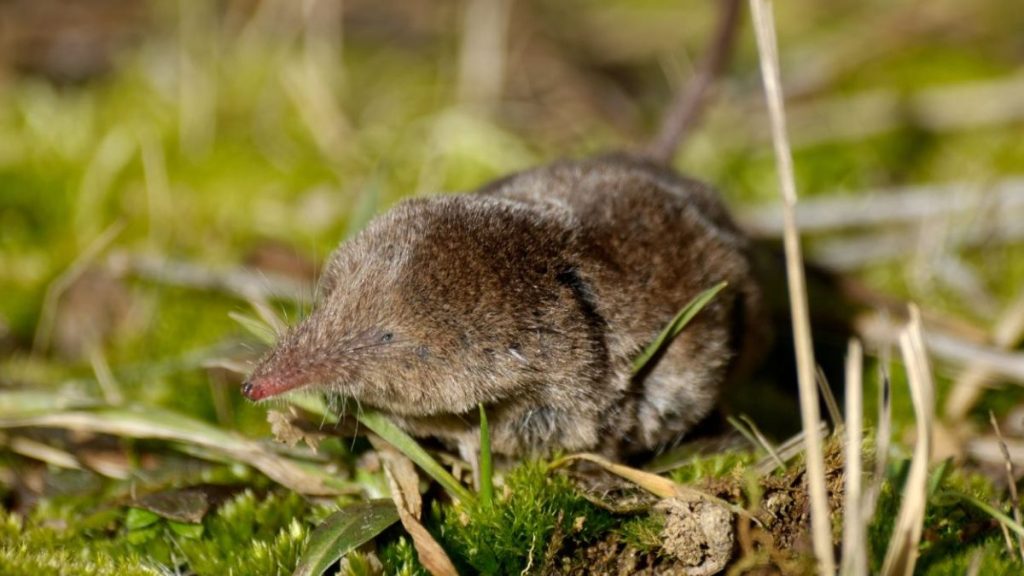
Common shrews have one of the highest metabolic rates of any mammal, markedly different from that of most species. Despite their small size, they must eat large amounts of earthworms and insects to meet their energy demands. Their fat reserves are quickly depleted, meaning they can die of starvation if they go without food for only a few hours.
Shrew wintering
Given their exceptionally high food requirements, it is remarkable that, unlike many other animals, shrews neither hibernate nor store food. Instead, they have an entirely different way of surviving the winter months.
In spring and summer, shrews grow rapidly, but in late autumn, their bodies begin to shrink. They lose up to 20 per cent of their body mass. This includes not only muscle and fat, but also internal organs such as the skull and brain.2 However, in early spring, the shrews begin to grow again.
Why don’t shrews freeze?
Although the relationship between body mass, metabolic rate, and air temperature is considered a basic ecological principle, it does not hold in the case of shrews. These small animals have a seemingly unfavourable surface area-to-mass ratio, and despite having winter fur, they would be expected to lose a great deal of heat in low temperatures. Yet this does not occur.
For evolutionary biologists, the entire wintering strategy of shrews is a paradox. Scientists therefore decided to investigate how the seasonal change in body size affects shrews’ energy use.1 They measured their metabolism at different times of the year, and the results were unexpected. Dina Dechmann, a scientist at the Max Planck Institute of Animal Behavior in Radolfzell and the lead author of the study, stated:
‘Somehow, the common shrew manages to cheat evolution.’3
The study found that despite their reduced body size, shrews do not use more energy per unit of body mass during the winter, even though ambient temperature fluctuations exceed 30 degrees. Moreover, their adaptive abilities are not the result of reduced activity in winter. While shrews do rest a bit more during this period, this fact can only partially explain the differences in their energy requirements.
After gathering all the data, scientists concluded that shrews continuously generate excessive amounts of heat due to their consistently high metabolic rate. Therefore, they do not need to increase their metabolic rate in winter. Simply put, a smaller body size means that the shrew uses less energy. This is, of course, beneficial given the limited food availability during winter.
Defying evolution or displaying design?
Do common shrews truly defy the rules of evolution, or are they miracles shaped by an intelligent Creator? Their bodies appear remarkably well-suited to surviving the harshness of winter. The ingenuity of God has no limits.
By the way, we recommend reading the articles:
- Why Do We Seek Longevity?
- Rainforests in Antarctica
- The Mystery of Jawed Vertebrates
- The Transformation of Fins into Limbs
- Who Were the Neanderthals?
Footnotes
- Schaeffer, P.J., 2020. Metabolic rate in common shrews is unaffected by temperature, leading to lower energetic costs through seasonal size reduction. Royal Society Open Science, 7: 191989.
- Lázaro, J. et al., 2017. Profound reversible seasonal changes of individual skull size in a mammal. Current Biology.
- Max Planck Society, 2020. Shrinking instead of growing: How shrews survive the winter. Phys.org. Available at: https://phys.org/news/2020-04-shrinking-instead.html.
Based on: J. P. Tomkins, Do shrinking shrews cheat evolution? Published on icr.org, May 11, 2020.
© Source of main image: Canva.

The portal EvolutionOfThinking.org, created by the Research and Education Institute, focuses on education and the dissemination of knowledge related to research on various aspects of human well-being.

