
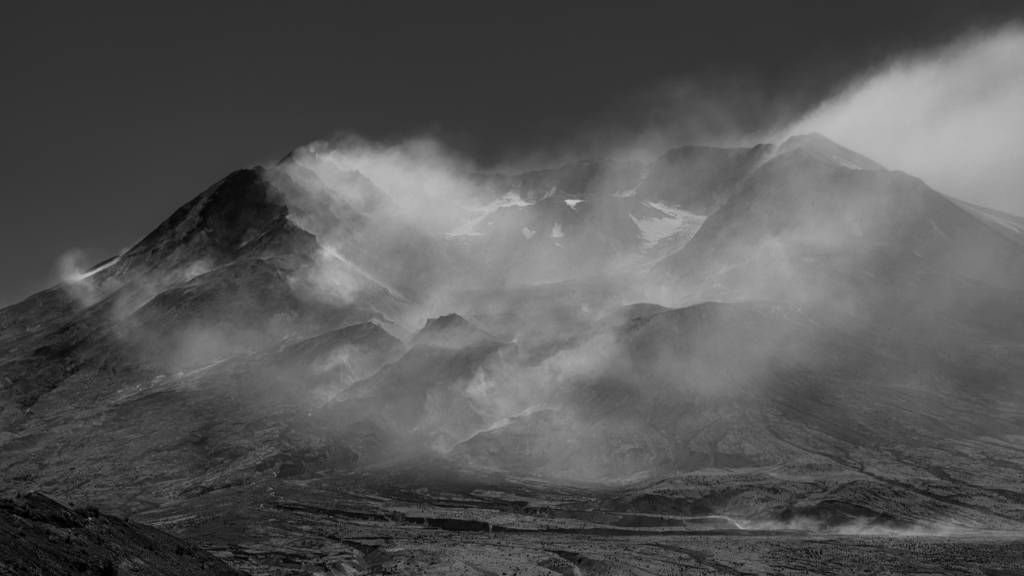
On 18 May 2020, the United States marked forty years since the eruption of Mount St Helens. Despite receiving little public attention, particularly within Poland, this eruption remains among the most significant geological events of recent times and holds considerable importance for science more broadly. Groups supporting theories of Earth’s catastrophic geological past frequently reference the eruption as evidence of dramatic natural phenomena shaping the planet’s history.
Undoubtedly, the objective here is not to dispute that earthquakes, volcanic eruptions, meteorite impacts, or floods have featured in Earth’s geological past. Instead, the volcanic eruption itself, together with four decades of subsequent research and carefully controlled observations, has encouraged scientists to reconsider a fundamental assumption in modern geology. Traditionally, geology has emphasised gradual processes occurring over extended periods, assigning only marginal significance to rapid or catastrophic geological events.
The eruption, subsequent observations, and related events have significantly undermined the confidence in the principle of uniformitarianism. The muted rumble of the explosion from 40 years ago continues to echo in the lecture halls, laboratories, and offices of all scientific institutions dealing with the natural sciences. As recently as 50 years before the eruption, geology was unequivocally dominated by uniformitarianism, which was the arbitrary assumption that all known natural processes always occurred in the same manner in the past as they do today.
The concept of uniformitarianism originated in 1785 through the insights and reflective, almost spiritual experiences of James Hutton (1726–1797). Hutton’s profound belief in the validity of his theory led him to introduce the notion of ‘deep time’, suggesting that enormous expanses of geological time were required to fully explain Earth’s features. Over subsequent decades, this approach steadily gained prominence within scientific circles, largely due to the influential contributions of figures such as Charles Lyell (1797–1875). By the late nineteenth and early twentieth centuries, the assumption that geological processes occurring today have always functioned in essentially the same slow and gradual manner had become entrenched as scientific orthodoxy. Processes such as erosion and sediment deposition were viewed as steady, incremental occurrences that required vast timescales to meaningfully shape both the biological and physical aspects of Earth’s environment.
(…) the regeneration of plant and animal species does not require centuries (…) to transform a barren landscape into a thriving ecosystem.
The eruption of Mount St Helens in 1980 unsettled many geologists, challenging laboratories to explain not only the eruption itself but also the geological phenomena that followed. This event prompted scientists to reconsider their views, increasingly recognising catastrophic occurrences as significant and common influences in Earth’s geological history. As a result, numerous geologists moved away from the traditional principle of uniformitarianism and adopted a different concept known as actualism.
The event also significantly impacted the biological sciences. It was observed that the regeneration of flora and fauna in the devastated area around the volcano occurred surprisingly quickly. It turned out that the process of renewing plant and animal species does not require centuries, even in such barren and lifeless terrain, to transform a dead landscape into a thriving ecosystem. Scientists also accepted evidence that ordinary, everyday sedimentary and erosional processes have far less impact on the geologic rock record than catastrophic events such as volcanic eruptions.
A brief digression
Since the eruption of Mount St. Helens, the concept of uniformitarianism (or uniformity) has essentially been abandoned and replaced by the concept of actualism. While uniformitarianism assumed a complete consistency, applying equally to geological processes and the manner in which these processes occurred, actualism adopts a more flexible perspective. Actualism preserves uniformity only in the sense that geological processes have always existed, but it allows the pace and intensity of these processes to vary significantly over time.
- Actualism: all processes occurred in the past in the same way as today, and there were no processes in the past other than those currently observed.
- Gradualism: processes occur continuously at the same rate.
- Catastrophism: the possibility of changes in the rate of processes.
In contrast to actualism, there is a view allowing for the existence of processes that do not currently occur. This view has been named non-actualism.
- Non-actualism: the same processes occurred differently in the past, and there were other processes that we do not observe today.
Thus, theoretical reality has become more complex, and today, our approach to studying the natural world should be differentiated into at least four categories:
- Gradualist actualism
- Catastrophic actualism
- Gradualist non-actualism
- Catastrophic non-actualism
Rapid deposition
The events observed and documented following the eruption of Mount St Helens have provided substantial support, and continue to do so, for the account presented in the Book of Genesis regarding the occurrence of a major global flood in Earth’s geological past.
The relatively sudden change in scientists’ approach to this issue was prompted by direct observations of the effects of Mount St. Helens’ volcanic activity. Geologists documented that since the first eruption in 1980, new sedimentary layers up to 120 meters high have formed on the slopes of the volcano and in its surroundings.
These deposits resulted from various processes, including airfall, pyroclastic flows, landslides, and even stream flows. Geologists have observed that laminated sediments can form much more rapidly than previously thought. Earlier assumptions held that laminated layers required many years to develop, typically suggesting that each individual layer represented one year’s deposition. However, we now know this assumption to be incorrect. A single large-scale deposition event at Mount St Helens produced a finely laminated formation measuring 25 metres thick in just a few hours. Recent observations and subsequent research have thus demonstrated that rapid deposition of volcanic material is not exceptional but typical.
Secular science used the observation of slow sedimentation, such as clay or limestone (micrite), as an argument for the slow evolution of the old Earth, claiming that all clays are formed by the slow settling of material from standing water. The public has long been persuaded, and continues to be influenced, to accept the formerly popular yet now outdated idea that extremely long periods of time are needed to explain the formation of thick layers of rock.
The phenomenon of clay precipitation from standing water is a process subject to observation and study, but clay rocks did not form this way. Rocks such as shales or siltstones often exhibit thin laminates a few millimeters thick. These layers did not form due to the deposition of sediments in standing water. Recent empirical evidence indicates that laminated clay must be deposited in conditions providing energy through moving water. The results of experiments align with the predictions of creationist scientists, who interpret the layering of clay forming siltstones and shales as deposits not forming cyclically in short periods comparable to tidal flooding but during the year-long Flood.1
Another discovery has also posed a challenge to geologists committed to uniformitarian principles. While some limestone-rich rocks were traditionally believed to form under high-energy conditions, carbonate sediments were always assumed to accumulate in tranquil marine settings. Recent laboratory studies, however, have revealed that micrite can likewise be deposited by flowing water. As a result, laminated limestones, similar to laminated siltstones, are no longer seen as products of a slow sedimentation process, contradicting previous assumptions.2
According to the authors of recent studies, experiments unequivocally show that carbonate muds can also accumulate in conditions of energy inflow. They also added: ‘Observations of modern carbonate environments and rock records suggest that the deposition of carbonate muds by water currents could have been common throughout geological history’.3
Rapid erosion
Mount St. Helens also demonstrated that erosion effects can occur much faster than previously claimed. The eruptive steam blast from the volcano’s crater, along with volcanic mudflows and ash, quickly transformed the landscape around the volcano, including its waterways. Avalanche deposits covered a significant portion of the lake, blocking the original route with ‘debris’ exceeding a cubic kilometer in volume, thereby carving a completely new course for the North Fork Toutle River.
After a smaller eruption on March 19, 1982, mud from melted snow and ice flowed down the North Fork Toutle River valley, carving a new canyon over 40 meters deep. The ‘Little Grand Canyon’ is a version of the Grand Canyon scaled down about 1:40, demonstrating the rapid flow and tremendous abrasive force of a water stream.
(…) for decades, it has been known that at erosion rates established by uniformitarians, continents, within the Earth’s assumed lifespan, should long ago have been reduced to sea level.
Creationists often use this analogy, reserving an appropriately larger scale to explain the possibility of the rapid formation of the Grand Canyon, 40 times larger, through a similar mechanism. Under the right circumstances, erosion can occur rapidly, and creationists believe the Flood provided enough water to sculpt canyons and mountains shaped by erosion in a relatively short time. This was especially true during the recession of waters after the Flood, as continents uplifted, and water flowed with great energy from elevated areas, crossing land masses layered with still-soft deposits, and reached the newly forming ocean basins.
In fact, it has been known for decades that at erosion rates established by uniformitarians, continents, within the Earth’s assumed lifespan, should long ago have been reduced to sea level. Recent studies have confirmed that the average erosion rate of exposed bedrock is approximately 12 meters per million years. This would result in the complete erosion of most continents in less than 50 million years. Nevertheless, they still exist.4
The rapid destruction of vegetation
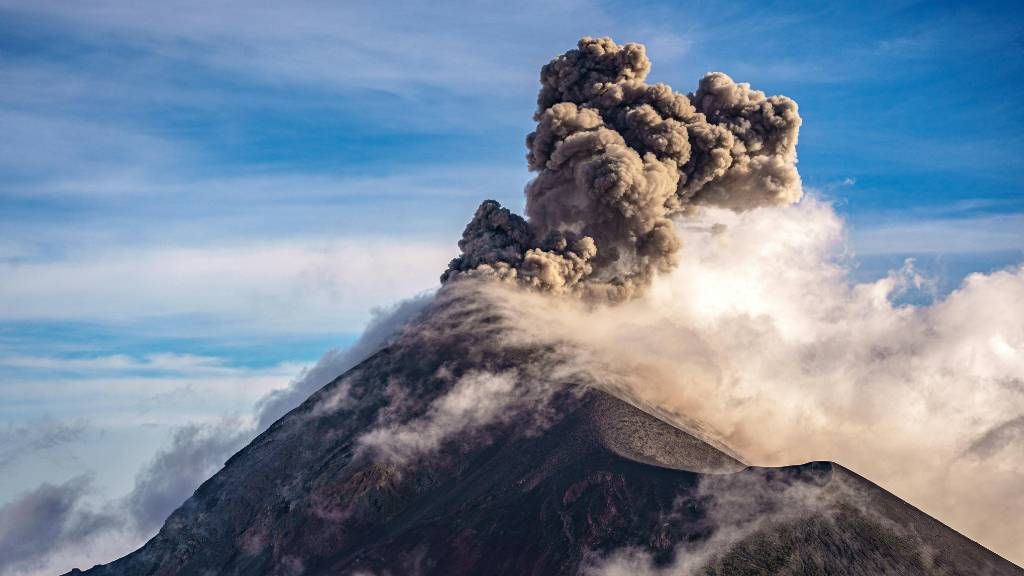
The eruption of Mount St. Helens in 1980 caused the most impactful landslide ever recorded on the northern side of the mountain. More than 3.3 billion cubic metres of rock and ice surged down the mountain at speeds surpassing 240 km/h, devastating its slope and triggering a powerful blast of steam. Approximately a quarter of this debris eventually settled in Spirit Lake. A landslide with a volume of approximately 680 million cubic meters struck Spirit Lake, creating a massive tsunami that tore apart the slopes of hills north of the lake. The enormous wave uprooted around a million large trees at their bases and transported the uprooted trees as logs back to the lake as the water receded. Many of these trees floated in an upright position, with their roots facing downward. After conducting research in 1985, it was estimated that over 19,000 vertical logs had settled at the bottom of the lake.
Dr. Harold Coffin from the Geoscience Research Institute discovered that many of the upright trees at the lake’s bottom were arranged randomly, not clustered together. He also noted that many of these trees had settled in the mud at various angles, creating the impression of deposition at different times.
Creationists continue to use the log mat formed on the lake and the sunken logs in Spirit Lake as an analogy for similar processes likely occurring during the Flood. The vertically submerged trees serve as an argument for explaining numerous fossilized polystrate trees that extend across coal seams from lower to higher layers. These observations also help explain the existence of fossilized forests, such as Specimen Ridge in Yellowstone National Park, where vertically positioned trees at various stratigraphic levels might have been deposited simultaneously during the Flood.
Today, 40 years later, a massive log mat still floats on Spirit Lake. This indicates that if the log mat were buried under further deposits, it could lead to the transformation of trees into coal beds. Coal bed formation does not take much time; it only requires the right conditions to form within a few decades. In laboratory settings, plant remains have been successfully converted into high-quality coal within a year.5
Rapid vegetation recovery
Observations of the regeneration of natural environments following various disasters hold considerable interest for creationist scientists. These observations provide a foundation for extrapolating from contemporary recovery processes to the phenomenon of global restoration of life after the Great Flood. On a smaller scale, Mount St Helens offers a useful model for understanding a world destroyed and transformed by God through His judgement. According to the Bible, when the Flood began, ‘all the springs of the great deep burst forth, and the floodgates of the heavens were opened’ (Gen. 7:11). This reference to the opening of Earth’s depths likely points to extensive volcanic activity occurring worldwide and continuing for 150 days (Gen. 7:24; 8:2). The magnitude of such destruction is almost beyond comprehension. Could a return to the original condition of the Earth even be possible following such devastation?
The volcanic island of Surtsey illustrates clearly how a mature and diverse landscape can develop within mere months, following its emergence from the Atlantic Ocean in 1963. In 2008, a researcher studying the island remarked, ‘Surtsey always surprises us… Every year, we find around 20 new species [of life forms].’ Since its initial appearance, Surtsey has provided habitat for roughly 60 plant species, including mosses, lichens, and evergreen shrubs. The rapid establishment of this ecosystem strongly challenges the claims of critics who maintain that Earth’s ecosystems could not have regenerated within two thousand years after the Flood.6
In 2015, studies were published on ‘river ecosystems showing “amazing” initial recovery after dam removal’ in the western United States. An article on the topic stated:
‘While conducting research in Washington, ecologist Christopher Tonra observed reservoir deposits resembling lunar landscapes transforming into thriving oases, becoming rich habitats with waterfalls – a landscape not seen there in at least the past century. “I watched this in awe; it was an incredible experience,” he said.’
The most significant volcanic eruption in 20th-century America, which we are discussing, demonstrates similarly remarkable regeneration of the devastated environment.
Volcanic eruptions have (…) significantly changed the way secular scientists view the course of geological processes, and they have become more willing to accept catastrophism
The eruption of Mount St. Helens in 1980 destroyed all living things around the volcano. Gas, ash, and molten hot rocks heated to over 530°C sterilized an area of 60 square kilometers, leaving a gray, lunar-like landscape completely devoid of plants and animals. However, as ecologists predicted, the first plant life began to return within a year.
The biological restoration of the Mount St. Helens area became a remarkable living laboratory for studying how ecosystems and species renew themselves even after such significant ecological disturbances. Biologists from the University of Washington observed the recovery of two land areas around the volcano, covered by rapidly flowing masses of water and mud – lahars. They discovered striking differences between the lahars. A lahar area surrounded by forest regained a healthy ecosystem of pines and firs much faster than an isolated lahar area, which remains predominantly covered by grass.7
When Noah and his family looked at the bleak and barren post-flood landscapes, they must have wondered how long they would have to live in such conditions. The area around Mount St. Helens quickly recovered from disaster-induced destruction. After just 20 years, biologists noted the return of all species thriving in an area resembling a thermonuclear blast zone. Today, this 40-year-old zone is a lushly forested area. Noah and his family undoubtedly witnessed the same rapid regeneration after the Flood, which likely took no more than a few decades.
Conclusions
Over the past forty years, Mount St Helens has provided substantial empirical evidence supporting catastrophism, thereby challenging uniformitarian assumptions. Its volcanic eruptions have also significantly reshaped secular scientists’ understanding of geological processes, making them increasingly receptive to catastrophic explanations. Creationist researchers continue to view Mount St Helens as a living laboratory and a valuable miniature model for examining both the potential consequences of destructive events, such as the Flood, and the scientifically observable rapid recovery processes of ecosystems following environmental disasters.
Furthermore, Mount St Helens, beyond its scientific significance and appeal as a tourist destination, is gradually gaining recognition in public awareness as a natural monument, symbolising catastrophic geological events and their profound effects on humanity and the natural world.
By the way, we recommend reading the articles:
- Virological Terminology
- The Relationship Between Theistic Evolutionism and Death
- Exploring Theories of a Godless Universe (Part One)
- Exploring Theories of a Godless Universe (Part Two)
- Exploring Theories of a Godless Universe (Part Three)
Footnotes
- Snelling, A. A. 2009. Earth’s Catastrophic Past, vol. 2. Dallas, TX: Institute for Creation Research, pp. 493–499.
- Boggs Jr., S. 2006. Principles of Sedimentology and Stratigraphy, 4th edn. Upper Saddle River, NJ: Pearson/Prentice Hall, pp. 159–167.
- Schieber, J. et al. 2013. ‘Experimental Deposition of Carbonate Mud from Moving Suspensions: Importance of Flocculation and Implications for Modern and Ancient Carbonate Deposition’, Journal of Sedimentary Research, 83(11), pp. 1025–1031.
- Blatt, H., Middleton, G. and Murray, R. 1980. Origin of Sedimentary Rocks, 2nd edn. Englewood Cliffs, NJ: Prentice-Hall, Inc.
- Larsen, J. 1985. ‘From Lignin to Coal in a Year’, Nature, 31(28 March), p. 316.
- Thorarinsson, S. 1967. Surtsey: The New Island in the North Atlantic. Translated by S. Eysteinsson. New York: Viking Press.
- Thompson, A. 2010. ‘Mount St. Helens Still Recovering 30 Years Later’, Live Science, 17 May. Available at: https://www.livescience.com/.
Based on: T. Clarey and F. Sherwin, ‘Mount St. Helens – Living Laboratory for 40 Years’, Acts & Facts, Institute for Creation Research, May 2020, pp. 10–13.
© Source of main image: Canva.

The portal EvolutionOfThinking.org, created by the Research and Education Institute, focuses on education and the dissemination of knowledge related to research on various aspects of human well-being.

