
Evolutionists believe they have identified many design flaws in living organisms. They have criticised several biological structures, especially the human eye, as being poorly designed. But is there scientific evidence to support these claims? Or do they reflect a lack of understanding of how various mechanisms in living organisms actually function?
The evolutionary perspective
Secular scientists argue that organisms evolve gradually through a struggle for survival, which also leads to flaws. Death is viewed as a means of altering DNA, allowing new traits to arise in a process that is without purpose or direction. Kenneth Miller from Brown University stated:
‘Although some argue that the life we know arose from the original plans of a Great Designer, biology provides new evidence that organisms were assembled layer by layer by the timeless tinkerer known as evolution.’1
Organisms shaped by evolution are therefore expected to contain many errors, and the existence of such errors is taken as clear evidence that life could not have been created by an intelligent God. Richard Dawkins, for example, claims that the human eye is poorly constructed. He states, mockingly, that either God did not design the eye or God made mistakes.
The eye – a ‘bad design’
Dawkins begins by focusing on light-sensitive cells. These cells have photosensitive elements at one end and a nerve at the other that carries signals to the brain. In some organisms, the eye is arranged in what is called an inverted structure, where the photosensitive elements face forward and the nerves point backward. In vertebrates, including humans, the structure is reversed. The photosensitive elements face the back of the eye, and the nerves are positioned in front. These nerves join at a single point and then turn towards the brain.
Dawkins argues that the inverted structure of the vertebrate eye is enough to show that it is poorly designed, claiming it is ‘wired backwards’.
‘Any engineer would naturally assume that the photocells would be facing the light, with their wires leading backward toward the brain. They would laugh at any suggestion that the photocells might face away from the light, with their wires sticking out on the side nearest the light. And yet that’s exactly what happens in the retinas of all vertebrates. As a result, each photocell is wired backward, with its wire sticking out on the side nearest the light. The wire has to travel across the surface of the retina to a hole in the retina (the ‘blind spot’) to join the optic nerve. This means that instead of having a clear path to the photocells, light has to pass through a forest of connecting wires, possibly suffering at least some attenuation and distortion (in fact probably not much, but it is the principle of the thing that would offend any engineer!).’2
Kenneth Miller followed in Dawkins’ footsteps. He stated that ‘evolution, unlike design, works by modifying pre-existing constructions… [It] does not create perfection’. He then reiterated Dawkins’ example: ‘The eye, this supposed paradigm of intelligent design, is a perfect starting point’.3 Miller admits, like Dawkins, that there is no evidence that the human eye functions poorly – quite the opposite. However, it is not built the way he thinks it should be:
‘Regarding the design argument, the key is not whether an organ or system works well, but whether its basic structural plan is an obvious product of design. The structural plan of the eye is not.’3
Here arises an essential question: Is the basis of the above criticism an objective standard or a subjective opinion?
Joining Dawkins and Miller, evolutionary biologist Francis Ayala stated that the eye’s poor design is the cause of vision problems.4 However, neuroscientists – the true experts – have not documented any such flaws.
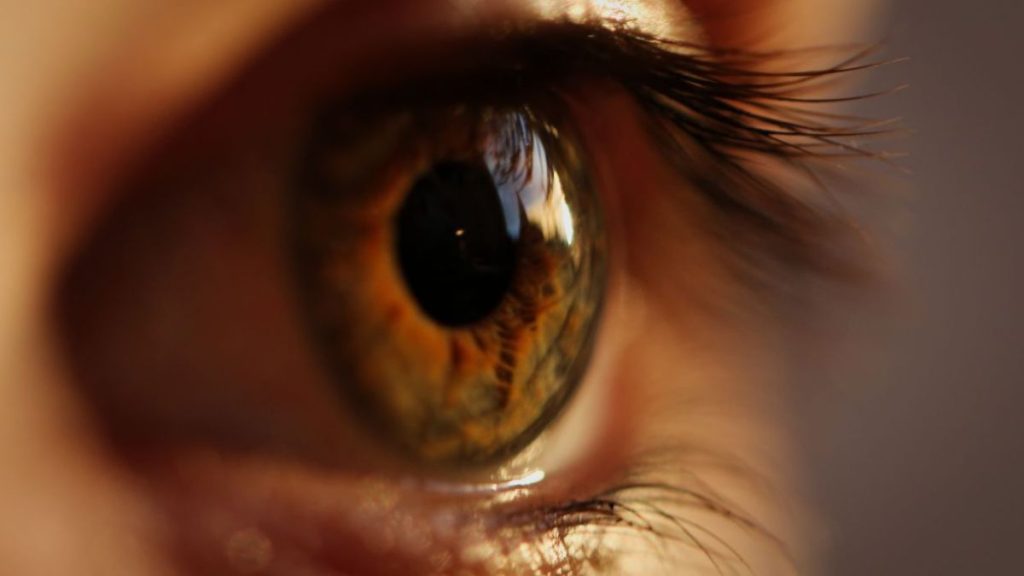
The eye – an optimized design
Dawkins, Miller, and Ayala claimed that the eye is not a fully functional system, as they believe the performance of one particular feature is not maximised. This view reflects a clear lack of understanding of the valid reasons for employing design compromises. A defining feature of complex engineering is that, in the process of optimisation, engineers must resolve many conflicting requirements.5
For the eye to function efficiently, that is, to convert light into meaningful information, several components are required:
- A mechanism for detecting light;
- Rapid replenishment and supply to this mechanism so it can function in large amounts of light, which tends to damage tissue;
- Removal of heat generated during the intense metabolic process, before this heat destroys the function of proteins;
- Removal of heat from the light focused on the retina;
- Prevention of light reflection inside the eye after passing through the photoreceptors.
The most effective engineering solution for balancing these factors is the inverted retina. For the visual system to operate at optimal efficiency, the photoreceptors must be oriented inward and embedded within the retinal pigment epithelium, a layer of cells located just behind the retina.6-9 If our eyes were structured in the way evolutionists propose, we would not be able to see at all.
An obvious scientific error
Neurophysicist Alipasha Vaziri, a professor at Rockefeller University, stated that the human eye could not be more sensitive to light than it already is.10 One study found that ‘the retina turns out to be an optimal structure designed to enhance image sharpness’.11 Another scientific report stated: ‘Photoreceptors operate at the outermost boundary allowed by the laws of physics, which means they are as good as possible, period’.12 A 2014 report directly addressed long-standing claims of poor design:
‘Having photoreceptors at the back of the retina is not a design constraint; it is a design feature. The idea that the vertebrate eye could somehow be improved if only, like in a traditional front-lit camera, it could arrange the wiring behind the layer of photoreceptors, as in cephalopods, is madness.’13
The claims made by Dawkins, Miller, Ayala, and others about the poor design of the eye are therefore incorrect. Scientific evidence supports the creative skill and engineering excellence of God the Creator.
By the way, we recommend reading the articles:
- Bird Intelligence: Chance or Design?
- Natural Selection – Truth or Fiction?
- The Syrinx: The Secret Behind Birds’ Songs
- Ants: Complex Creatures
- Did God Create Parasites?
Footnotes
- Miller, K.R., 1994. Life’s Grand Design. Technology Review, 97(2), pp. 24–32.
- Dawkins, R., 1987. The Blind Watchmaker. New York: W. W. Norton & Co., p. 93.
- Miller, K.R., 1994. pp. 24–32.
- Ayala, F.J., 2007. Darwin’s Gift to Science and Religion. Washington, D.C.: Joseph Henry Press, p. 22.
- Guliuzza, R., 2012. Clearly Seen: Constructing Solid Arguments for Design. Dallas, TX: Institute for Creation Research, pp. 32–33.
- Anderson, D.H., Fisher, S.K. and Steinberg, R.H., 1978. Mammalian cones: Disc shedding, phagocytosis and renewal. Investigative Ophthalmology and Visual Science, 17(2), pp. 117–133.
- Parver, L.M., Auker, C.R. and Carpenter, D.O., 1983. Choroidal blood flow: III. Reflexive control in human eyes. Archives of Ophthalmology, 101(10), pp. 1604–1606.
- Hamilton, H.S., 1985. The Retina of the Eye—An Evolutionary Roadblock. Creation Research Society Quarterly, 22(2), pp. 59–64.
- Franze, K. et al., 2007. Müller cells are living optical fibers in the vertebrate retina. Proceedings of the National Academy of Sciences, 104(20), pp. 8287–8292.
- Rockefeller University, 2016. Study suggests humans can detect even the smallest units of light. Available at: https://newswire.rockefeller.edu (July 20 2016).
- Labin, A.M. and Ribak, E.N., 2010. Retinal glial cells enhance human vision acuity. Physical Review Letters, 104(15), p. 158102.
- Angier, N., 2010. Seeing the Natural World With a Physicist’s Lens. The New York Times. Available at: https://www.nytimes.com (November 1 2010).
- Hewitt, J., 2014. Fiber optic light pipes in the retina do much more than simple image transfer. Phys.org. Available at: https://phys.org (July 21 2014).
Prepared based on: R. J. Guliuzza, Evolutionists can’t see eye design, Acts&Facts, Institute for Creation Research, October 2016, pp. 16-18.
© Source of main image: Canva.

The portal EvolutionOfThinking.org, created by the Research and Education Institute, focuses on education and the dissemination of knowledge related to research on various aspects of human well-being.

