
Could a benevolent God have created parasites? Let us explore what both science and the Bible have to say on this matter.
God is often accused—interestingly, even by various atheists—of creating a world filled with evil and suffering. Humanity faces a range of afflictions, from diseases to disasters and wars. The natural world is also marked by suffering, with predators hunting and killing other animals. The biblical account of creation, however, provides an explanation for the origins of these issues. According to the Bible, the world was originally almost perfect—’very good’, in God’s own words.1 Animals and humans were initially herbivores, meaning that there were no predators.
Examples of Parasites
Parasites remain a part of our world today, with many parasitic species causing diseases in their hosts, including plants, animals, and humans. A familiar example is the tapeworm, which resides in the intestines of both humans and other animals. These parasites cause tapeworm infections, with symptoms such as weight loss, vomiting, and diarrhoea. If left untreated, the infection can lead to death.2
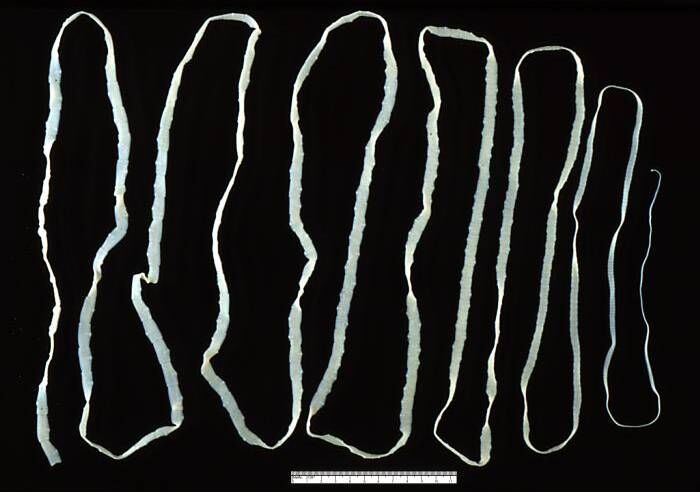
Another common parasite is the roundworm (Ascaris lumbricoides), which infects the small intestines of humans and causes ascariasis. This disease is particularly prevalent in impoverished regions around the world. While it can remain asymptomatic for a prolonged period, it eventually leads to severe complications and can prove fatal.3 Treatment typically involves the removal of the parasites from the host.
These are just two examples of the many parasitic organisms that exist in today’s world. Parasites are characterised by their ability to benefit at the expense of their host, providing nothing in return. In other words, parasites gain, while the host suffers, often severely.
Fossilized Parasites
Secular scientists argue that parasites have existed for hundreds of millions of years. In 2020, paleontologists in southern China discovered what they believe to be the oldest known parasite. They found Cambrian-era fossils of brachiopods (Neobolus wulongqingensis) with unusual tubular worms attached to them. The hosts were considerably smaller than those without worms, suggesting that they suffered due to the presence of the parasites.4
Would a loving God create such repulsive creatures? This is a question that some Christians, particularly those who accept the view of an ancient Earth and the theory of evolution over millions of years, find difficult to answer. As a result, some have even abandoned their faith, becoming atheists or agnostics, believing it would be better for God not to exist than for Him to be capriciously cruel. Such a God would, in fact, align with the worldview offered by evolution and an old Earth.
How, then, can we reconcile the existence of a loving God, who created all things, with the presence of parasites?
The Cambrian Explosion or the Biblical Flood?
The aforementioned parasite fossils were found in Cambrian strata, linked to the Cambrian explosion. Scientists assert that the Cambrian era saw the sudden appearance of a wide variety of species, but they are unable to explain how these organisms evolved, as there is no evidence of gradual evolutionary transitions. Instead, geological evidence suggests that these organisms, along with many prehistoric creatures such as trilobites and dinosaurs, were buried in a sudden and unexpected manner.5
Only one catastrophe aligns with this occurrence: the biblical Flood. This evidence lends support to the biblical narrative of God’s existence, the creation of the world, and Noah’s Flood.6
God, Creation, and Parasites
If God exists and created a ‘very good’ world, how should we understand the existence of parasites? Parasites are by nature exploitative, taking without providing anything in return. Such selfishness would have had no place in the ‘very good’ world that God initially made. This suggests that the parasites we see today were not always parasitic—though around 40% of species today are considered as such.7
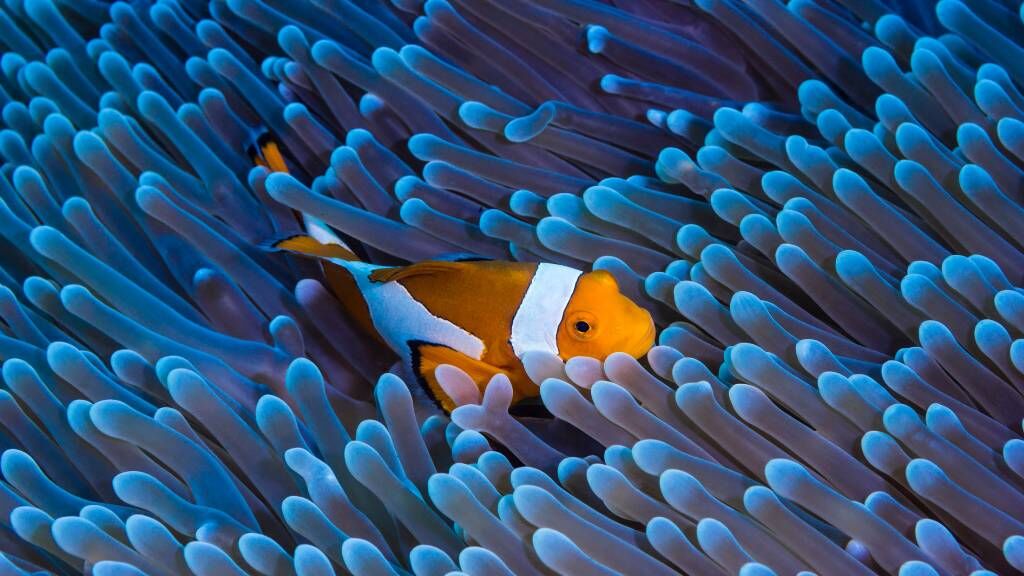
Symbionts, as opposed to parasites, establish relationships with their hosts where both sides support and rely on each other for mutual well-being. Around 80-90% of plant species worldwide depend on mycorrhizae, a symbiotic relationship with specific fungi.8 Symbiosis is mutualistic. Both parties benefit, or commensalistic, where one party gains without harming the other. The clownfish (Amphiprion percula) and the magnificent sea anemone (Heteractis magnifica) are an example of a mutualistic relationship.
The Role of Human Sin
If God designed a world where selfishness did not exist, even among animals, it is likely that the parasites we encounter today were originally symbiotic organisms.9 However, the fall of Adam and Eve introduced selfishness into the world, a corruption that spread through the flora and fauna over which humanity was meant to have dominion. Creatures that previously did not harm others began to exhibit selfish behaviour, causing harm to other organisms.
Many symbiotic species, which once benefited their hosts, no longer did so—possibly even as a means of ensuring their own survival. Given the vast genetic diversity of creatures that existed before sin10 and their remarkable adaptive capabilities, including phenotypic plasticity, these animals were able to adjust successfully to the changing conditions. This adaptability applies to animals living both after humanity’s fall into sin and following the global Flood.
God is not a God of selfishness. He demonstrated this by offering His Son, who is one with Him,11 to die on the cross in order to save humanity from death. Therefore, we can be confident that God did not create parasites; their emergence was a consequence of human sin.
By the way, we recommend reading the articles:
- Noah’s Flood – Global or Local in Extent?
- The Qumran Scrolls – The Most Important Discovery in Biblical Archaeology
- Speech – A Unique Human Ability
- The Tower of Babel – Extra-Biblical Narratives
- What is the Higgs Boson?
Footnotes
- The Bible, New King James Version, 1982, Genesis 1:31.
- See: Tasiemce. Available at: https://www.medianauka.pl/tasiemce
- See: Glista ludzka. Available at: https://www.medianauka.pl/glista-ludzka
- Marshall, M., Oldest known parasite is a worm-like animal from 512 million years ago, NewScientist, 2 June 2020. Available at: https://www.newscientist.com/article/2244897-oldest-known-parasite-is-a-worm-like-animal-from-512-million-years-ago/
- Morris, J., Do Fossils Show Signs of Rapid Burial?, in The New Answers Book 3, Answers in Genesis, 30 December 2013. Available at: https://answersingenesis.org/fossils/how-are-fossils-formed/do-fossils-show-signs-of-rapid-burial/
- Ibid.
- Patton, P., Earth’s First Parasite, Indiana Public Media, 9 March 2021. Available at: https://indianapublicmedia.org/amomentofscience/earths-first-parasite.php
- See: Mycorrhiza. Available at: https://www.anbg.gov.au/fungi/mycorrhiza.html
- Did God Create Parasites?, in Answers Magazine, Answers in Genesis, 1 November 2017. Available at: https://answersingenesis.org/biology/microbiology/did-god-create-parasites/
- Carter, R.W., Powell, M., The genetic effects of the population bottleneck associated with the Genesis Flood, Journal of Creation, 30(2), August 2018, pp. 102–111. Available at: https://creation.com/genetic-effects-of-the-flood
- The Bible, New King James Version, 1982, John 10:30.
© Source of main image: Canva.

The portal EvolutionOfThinking.org, created by the Research and Education Institute, focuses on education and the dissemination of knowledge related to research on various aspects of human well-being.

