
Darwin’s theory of evolution indicates that animals require millions of years to develop new forms. Despite this, some species can undergo significant changes in just a few months. The cause of this rapid transformation is phenotypic plasticity.
Phenotypic plasticity refers to the ability of an organism to develop different physical traits (phenotypes) throughout its lifetime, despite not changing its genetic makeup (genotype). Environmental factors, such as temperature, humidity, and the presence of predators, are the main drivers of these changes. Essentially, phenotypic plasticity enables organisms to swiftly adapt to new environments—in some cases, even within just a few months or years. This suggests that such organisms do not need hundreds of thousands or millions of years to adjust to new conditions.
Examples of Plasticity Among Animals
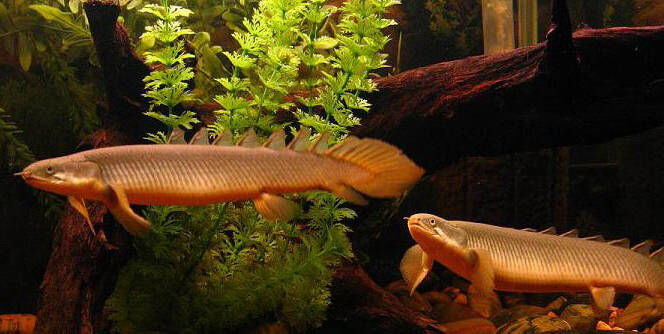
Phenotypic plasticity is evident in a variety of species. One such example is the Senegal bichir, a small fish native to Senegal.1 Emily Standen from the University of Ottawa found that this species can rapidly develop traits that enable it to survive on land. In addition to its gills, the fish has rudimentary lungs. When forced to live on land for extended periods, its lungs expand, the bones in its fins sharpen and develop muscle, and its neck becomes more flexible. Standen’s later observation is particularly revealing, as she states: ‘They resemble intermediate species between aquatic and terrestrial organisms found in the fossil record’.2
Another highly adaptable organism is a species that is much more familiar to us: the dung beetle. Armin Moczek, a biologist at Indiana University, set out to investigate how this species adapts to cooler climates. It was found that in colder environments, the beetles face difficulty developing wings strong enough for flight. Their response? They grow larger wings, which enable them to fly freely.3
Another example involves spadefoot toads. David Pfennig, a scientist at the University of North Carolina who specialises in spadefoot toads, observed that while these toads are typically omnivorous, their tadpoles develop larger teeth and stronger jaws when fed a purely carnivorous diet. Additionally, their digestive system becomes more complex.4
Charles Darwin vs. Phenotypic Plasticity
One of the most fascinating examples of phenotypic plasticity involves Darwin’s famous finches from the Galápagos Islands. Lee Spetner, a biophysicist at Johns Hopkins University, references an instance in 1967 when a group of finches was relocated to another set of islands in the Pacific Ocean, some 500 kilometres away. Initially, all the finches appeared almost identical. However, after 17 years, when they were first examined following their relocation, it became clear that the finches had developed different beak shapes and behavioural patterns. ‘If this diversification occurred in less than 17 years,’ Spetner asks, ‘why would Darwin’s Galápagos finches need two million years?’5
Phenotypic Plasticity: Past and Present
Phenotypic plasticity is a phenomenon that appears to conflict with Darwin’s theory of evolution, which suggests that significant evolutionary changes require hundreds of thousands or even millions of years. In contrast, plastic organisms need far less time to adapt. It is also possible that such organisms existed in the past.
Could Tiktaalik, whose fossils are estimated to be around 380 million years old, have exhibited phenotypic plasticity? The case of the Senegal bichir—another lobe-finned fish—suggests that this possibility cannot be dismissed. It may be that Tiktaalik and other lobe-finned species, typically regarded as transitional forms, needed only one generation to adapt to walking on land. Such a rapid adaptation would drastically reduce the time traditionally thought necessary for the evolution of these species.
Contrary to Darwin’s theory, it appears that animals did not necessarily require millions of years for today’s species to emerge. This process could have occurred in a much shorter timespan.
The Source of Phenotypic Plasticity
Finally, a crucial question arises: where does the ability for phenotypic plasticity in these organisms come from? Research into phenotypic plasticity, along with related fields such as epigenetics and cultural evolution, is ongoing,6 but it is evident that for plasticity to occur, there must be a substantial amount of genetic information enabling such varied phenotypic expression. The source of this genetic information remains unclear. Hundreds of millions of years is far too brief a period for natural selection and random mutations to generate both phenotypic plasticity and the genetic information required. The only plausible explanation is that an intelligent Creator designed it.
By the way, we recommend reading the articles:
- Primitive Religion – Animism or Monotheism?
- Science vs. Religion: Which Side Holds the Truth?
- What Do Astronauts Have To Say About God?
- The Fourth Dimension – Part 1: The Shape of the Universe
- The Fourth Dimension – Part 2: Exploring the Intersection of Science and Spirituality
Footnotes
- Mitchell, E., Fish out of Water Said to Rise, Lift up Their Heads, and Walk, Answers in Genesis, 13 September 2014. Available at: https://answersingenesis.org/theory-of-evolution/fish-out-water-rise-lift-heads-and-walk/
- Buranyi, S., Do we need a new theory of evolution?, The Guardian, 28 June 2022. Available at: https://www.theguardian.com/science/2022/jun/28/do-we-need-a-new-theory-of-evolution
- Ibid.
- Ibid.
- Spetner, L., The Evolution Revolution – Why Thinking People Are Rethinking the Theory of Evolution, Judaica Press, Brooklyn, NY, 2014, pp. 75–76.
- Lightner, J.K., Developmental system plasticity—a brief initial assessment of extent, design, and purpose within the creation model, Journal of Creation, 28(3), December 2014, pp. 67–72. Available at: https://creation.com/developmental-system-plasticity
© Source of main image: Canva.

The portal EvolutionOfThinking.org, created by the Research and Education Institute, focuses on education and the dissemination of knowledge related to research on various aspects of human well-being.

