
Is there life beyond Earth, as half the world believes? What perspectives do science and religion offer on this question?
In 2017, Star Wars: The Last Jedi, the second instalment in the most recent Star Wars trilogy, was released. To coincide with this, the market research firm Glocalities conducted a global survey exploring beliefs about extraterrestrial life.1 It was the first study of its kind on such a large scale, gathering responses from 26,000 people across 24 countries. Participants were asked a series of questions, including:
1. Do you believe that life exists beyond Earth?
2. Do you believe in the existence of intelligent extraterrestrial civilizations in the universe?
The survey results were striking. In response to the first question, 61% of participants believed that life exists beyond Earth, while 17% did not. The remaining 22% were uncertain. Opinions on the existence of intelligent extraterrestrial civilizations were more divided. While 47% believed such civilizations exist, 26% disagreed, and 28% were unsure.
Another question explored whether life on Earth may have originated in space. A quarter of respondents supported this idea, while 39% rejected it, and 36% had no definitive opinion. Among those who believed in intelligent extraterrestrial life, views on seeking contact varied. Of the 47% who held this belief, 60% supported making contact, 21% opposed it, and 19% remained undecided.2
A culture fascinated by aliens
The survey underscored how deeply the idea of extraterrestrial life is embedded in modern culture. Almost half of the global population—though with variations between countries—believes that intelligent alien civilizations exist and that contact with them could, in theory, be possible. While the study did not explore this directly, it is likely that some of these believers also think aliens have already visited Earth, continue to do so, or may even make their presence known in the near future.
Public belief in aliens is largely shaped by their widespread presence in modern culture. This is particularly evident in popular media, including literature, video games, and films such as War of the Worlds, Close Encounters of the Third Kind, Independence Day, and Contact, as well as television series like The X-Files. However, these cultural depictions are themselves influenced by scientific theories about extraterrestrial life. The phenomenon of unidentified flying objects (UFOs),3 often perceived as alien spacecraft, also plays a role in reinforcing such beliefs, though this remains a separate and complex issue.
Aliens and world religions
Religious beliefs also shape people’s perspectives on extraterrestrial life. Most major religions do not take a definitive stance on the subject, often deferring to scientific discoveries. Faiths such as Catholicism, Judaism, Islam, Hinduism, and Buddhism have not developed formal doctrines regarding the existence of alien life. However, many followers of Hinduism, Buddhism, and even Islam believe in the possibility of extraterrestrial beings, drawing on interpretations of their sacred texts. The same applies to Judaism.4
Some religious and spiritual traditions take a more definitive stance on extraterrestrial life. Evangelical Christians and Jehovah’s Witnesses categorically dismiss the possibility of intelligent alien beings. In contrast, the concept of extraterrestrial life plays a significant role in the beliefs of the Mormon Church and the New Age movement. Furthermore, certain UFO-centred religions, such as the Raelian movement and Scientology, place extraterrestrial beings at the heart of their doctrines and practices.5
Secular perspectives
Among those with a secular, science-based worldview, opinions on extraterrestrial life are just as divided. This divide largely stems from the contrast between the Drake Equation and the Fermi Paradox. The Drake Equation suggests that numerous extraterrestrial civilizations could exist in our galaxy, depending on the assumptions applied to its variables.6 In contrast, the Fermi Paradox highlights the contradiction between these optimistic projections and the continued absence of evidence, despite extensive efforts such as the SETI programme (Search for Extraterrestrial Intelligence).
Even within non-religious circles, views on alien life remain varied. Some are convinced that extraterrestrial beings, whether microbial or intelligent, must exist, while others remain sceptical. Nonetheless, hope persists, even among sceptics.7 This ongoing debate is further fuelled by ufologists, who claim to investigate UFOs from a ‘scientific’ perspective. In Poland, such beliefs are primarily promoted by the Nautilus Foundation.
Aliens vs. probability calculations
The apparent contradiction between the Drake Equation and the Fermi Paradox is, in fact, misleading. Like any mathematical formula, the Drake Equation allows for certain variables to be set to zero. In mathematics, multiplying by zero at any point results in a final value of zero—in this case, indicating no extraterrestrial civilizations. A key variable in this equation is fₗ, which represents the proportion of planets where abiogenesis, the spontaneous emergence of life from non-living matter, has taken place. Supporters of the idea that life exists beyond Earth, particularly those who adhere to evolutionary principles, argue that life must have arisen spontaneously on at least some planets.
At the same time, growing scientific evidence suggests that abiogenesis is virtually impossible.8 Probability calculations leave little room for doubt. British astrophysicist Sir Fred Hoyle estimated the likelihood of life emerging from non-living matter at 1 in 10⁴⁰,⁰⁰⁰—a figure so vast that it contains 40,000 zeros. He famously remarked that such odds would be enough to ‘bury Darwin and the whole theory of evolution.’9 However, biophysicist Harold Morowitz (who, incidentally, is an atheist) calculated these odds as 1 in 1010,000,000,000! For comparison, it is estimated10 that there are 3.28 × 1080 particles in the entire universe.
Thus, the chances that fl in the Drake Equation equals 0 are practically 100%. That means there is a 100% chance that the number of extraterrestrial civilizations (N in the Drake Equation) is 0.
Only God could have created both humans and, if they exist, extraterrestrials
In other words, if intelligent life exists beyond Earth, it could not have emerged by chance. Moreover, given the impossibility of abiogenesis, the absence of extraterrestrials would also imply that human life did not arise through spontaneous processes. The only possible source of creation, whether for humanity or any other beings that may exist in the universe, is a higher intelligence—God the Creator.
Is half of humanity justified in believing in aliens? The question remains unanswered, as science has yet to find any definitive evidence of extraterrestrial life. It is possible that God created only humanity, which raises questions about the purpose of such an immense universe. Alternatively, extraterrestrial beings may exist but lack technology comparable to ours, presenting theological challenges. Another possibility is that God created them outside our universe, beyond human comprehension.
The truth remains uncertain, and for now, we can only speculate. What we do know with certainty is that God the Creator exists, for without Him, neither we nor anything else would have come into existence.
By the way, we recommend reading the articles:
- Where Are the Fulgurites from Millions of Years Ago?
- Was Our Universe Created in a Laboratory?
- Stromatolites: Unveiling the Mystery of the “Living Stones”
- How Did Life Begin?
- Fish Intelligence: A Match for Apes?
Footnotes
- Thomas, B., 2017, Poll: Half of Humanity Believes in Aliens, Institute for Creation Research, 26 December. Available at: https://www.icr.org/article/poll-half-humanity-believes-aliens/
- Lampert, M., A survey in 24 countries published on the occasion of The Last Jedi Star Wars movie, Glocalities. Available at: https://glocalities.com/reports/majority-of-humanity-say-we-are-not-alone-in-the-universe
- Ufological circles also use the Polish acronym “NOL.”
- Weintraub, D. A., 2014, Religions and Extraterrestrial Life, Springer-Praxis, Nashville.
- Ibid.
- An example of an online calculator using the Drake Equation: Available at: https://www.spacecentre.nz/resources/tools/drake-equation-calculator.html
- Ham, K., 2019, Extraterrestrial Life More Common Than Previously Thought?, Answers in Genesis, 5 December. Available at: https://answersingenesis.org/astronomy/extraterrestrial-life-more-common-than-previously-thought/
- Batten, D., 2021, Origin of life, Creation Ministries International, 8 November. Available at: https://creation.com/origin-of-life
- Big enough to bury Darwin, 2001, The Guardian, 23 August. Available at: https://www.theguardian.com/education/2001/aug/23/highereducation.peopleinscience
- Bennett, J., 2017, How Many Particles Are in the Observable Universe?, Popular Mechanics, 11 July. Available at: https://www.popularmechanics.com/space/a27259/how-many-particles-are-in-the-entire-universe/
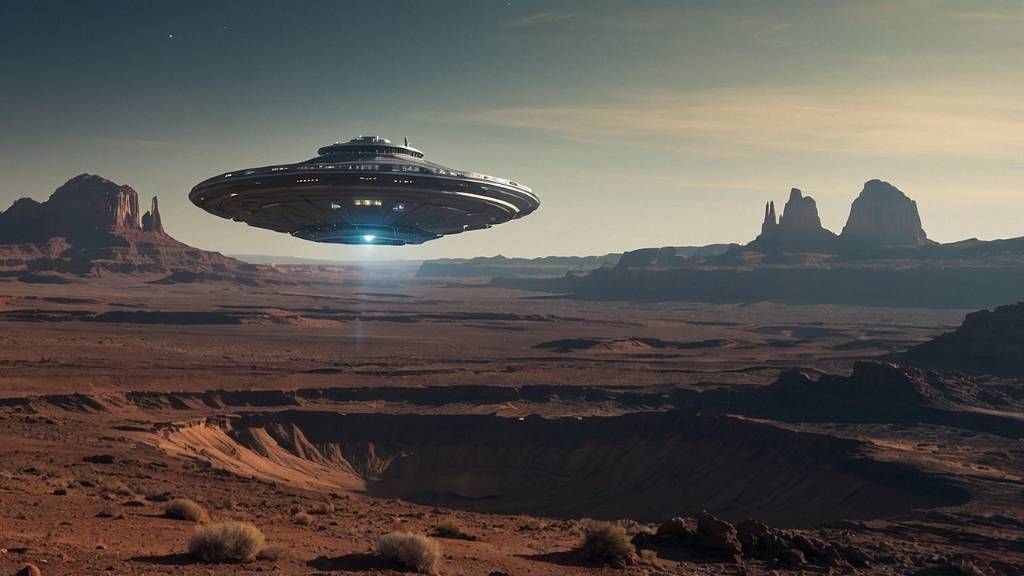
© Source of main image: leonardo.ai.

The portal EvolutionOfThinking.org, created by the Research and Education Institute, focuses on education and the dissemination of knowledge related to research on various aspects of human well-being.

