
The future of our world is full of uncertainty. Are we facing disaster, or is there still a chance for salvation?
What is happening to our world? Are we approaching collapse, or even an apocalyptic end? In recent decades, our culture has grown increasingly accustomed to the notion that the planet is heading towards an ambiguous and uncertain fate. Is this merely speculation? Should we instead anticipate a future shaped by scientific and technological advancement, including space exploration? Or is there genuine cause for concern? It is worth examining more closely the potential threats that may soon emerge.
Cosmic doom
The first threat that keeps many people awake at night is the possibility of a large celestial body colliding with our planet. It is widely believed that 66 million years ago, an asteroid about 10 km in diameter hit the Earth at what is now the Chicxulub crater. The massive tsunami and climate changes caused by the asteroid are thought to have led to the extinction of dinosaurs.1 If it happened to the dinosaurs, why shouldn’t it happen to us? For this reason, astronomers all over the world scan the skies to detect asteroids that may pose a threat to humanity as we know it. Of course, there are other types of threats from space as well.
One such theoretical threat is the possibility of alien life. Modern culture, with American popular media at the forefront, has devoted vast amounts of paper, ink, and film to this subject.2 If aliens do, in fact, exist and make contact with us, what will be the consequences of such an event? Will they be hostile and powerful enough to attack, colonise, or even annihilate us? Numerous signals are currently being sent into space, some of which are deliberately designed to attract the attention of potential extraterrestrial beings, but is that what we truly want?3
Humans are their own worst enemies
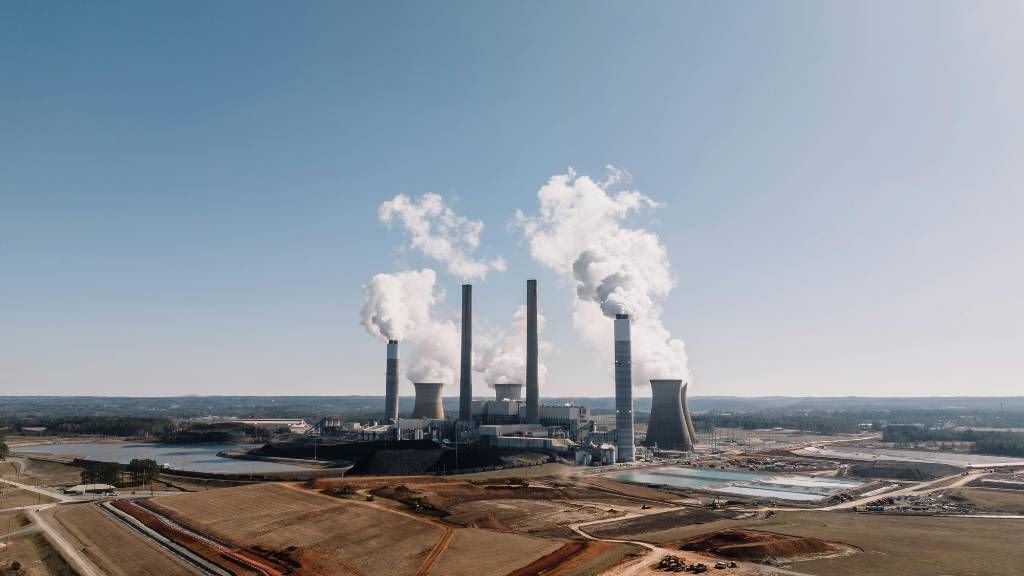
We do not need to look far into space to find threats, as humanity itself poses a serious danger to its own survival. We are living in a time of deep instability, and our global civilisation appears to be moving toward self-destruction. The Global Risks Report 2023, published by the World Economic Forum, introduces the unsettling neologism polycrisis in this context. The term refers to a situation in which multiple crises are interconnected, each exacerbating the others and creating the potential for a cascading, uncontrollable collapse.4
What crises are we facing? The report groups individual risks into five categories: economic, environmental, geopolitical, societal, and technological. A survey conducted by the authors indicates that, according to experts, the three most pressing risks over the next two years are the cost-of-living crisis (a societal risk), natural disasters and extreme weather events (an environmental risk), and geo-economic confrontation (a geopolitical risk). Looking further ahead, the most significant threats projected to affect humanity over the next decade are overwhelmingly environmental. The top four positions are all occupied by environmental risks, with the failure to mitigate climate change leading the list. Climate change, in particular, threatens to trigger a cascade of severe consequences.5
There are, of course, many more risks, including debt crises, natural resource shortages, rising cybercrime, social polarization, and the threat of weapons of mass destruction, among others. The COVID-19 pandemic of 2020 not only caused a massive public health crisis but also contributed to weakening the global economy.6 The Russian invasion of Ukraine in 2022 presents another global threat, especially as Russia recently withdrew from the Black Sea Initiative.7 Kremlin propaganda, which entertains visions of London or Paris reduced to nuclear ruins, contributes further to an already volatile global atmosphere.8 Moreover, should China launch an attack on Taiwan, it would likely trigger a severe disruption in the semiconductor industry, a sector critical to the functioning of modern electronics. Such a development would also risk a significant escalation in tensions between China and the United States.9
Where are we to find hope?
Confronted with this information, one might be overcome by a sense of despair. Where are we heading? Where can we find hope for ourselves and our children when the entire world seems on the verge of collapse? The answers to these questions can be found in the Bible, which foretold the condition of the modern world long before any of us were born. In the Gospel of Matthew, the following words of Jesus Christ are recorded:
‘You will hear of wars and rumors of wars, but see to it that you are not alarmed. Such things must happen, but the end is still to come. Nation will rise against nation, and kingdom against kingdom. There will be famines and earthquakes in various places. All these are the beginning of birth pains’ (Matthew 24:6-8).
There is some measure of comfort in knowing that God is fully aware of what is to come. While wars, famines, and earthquakes have been part of human history for millennia, they were typically confined to specific regions. Today, however, the world is deeply interconnected through advanced technologies. A crisis affecting just a few critical areas could cause the current world order to collapse abruptly, leading to widespread chaos, including even more devastating wars and famines.
Hope for a better future
The Bible, however, does not leave us without hope. While it does predict future catastrophes, it also points to a culmination that will completely transform both the world and humanity. God has given us the promise of a new creation, an enduring world prepared for a renewed humanity, one that will never again face destruction. The Apostle John described this world in the Book of Revelation, a text often seen as frightening and mysterious, though in truth it offers a message filled with hope:
‘Then I saw “a new heaven and a new earth,”[a] for the first heaven and the first earth had passed away, and there was no longer any sea. I saw the Holy City, the new Jerusalem, coming down out of heaven from God, prepared as a bride beautifully dressed for her husband. And I heard a loud voice from the throne saying, “Look! God’s dwelling place is now among the people, and he will dwell with them. They will be his people, and God himself will be with them and be their God. ‘He will wipe every tear from their eyes. There will be no more death’[b] or mourning or crying or pain, for the old order of things has passed away.” He who was seated on the throne said, “I am making everything new!” Then he said, “Write this down, for these words are trustworthy and true’ (Revelation 21:1-5).
The present world, according to biblical teaching, is destined to come to an end in the foreseeable future. The new world that is to follow will be entirely free from sorrow, suffering, and anger. The text cited above makes clear that this will not be a vague or purely spiritual realm inhabited after death, but a renewed and tangible reality comparable in substance to the world as it now exists. Its sovereign will be Jesus Christ, who, in an act of redemptive love, bore the burden of human sin and its consequences on the cross at Golgotha. Unlike contemporary rulers, whose authority is limited and transient, this King will reign eternally, and those united with Him will live in His enduring kingdom.

Infinite divine love
The only thing required to make this promise a reality is our willingness to offer ourselves and our hearts. Since Christ took upon Himself the burden of death for each of us, regardless of whether one currently believes in Him, there would be no promise of eternal life without Him, and we would not even be here today. It is by His grace alone that we are still alive.
All we can do is accept His gift of redemption and allow His love to transform us completely. Each of us, though naturally inclined to harm others, damage the world, or engage in acts such as murder, theft, or immorality, can be completely transformed through the love and Spirit of God. Through this transformation, we learn to care for one another and for the planet we share. As the Apostle Paul clearly states:
‘The acts of the flesh are obvious: sexual immorality, impurity and debauchery; idolatry and witchcraft; hatred, discord, jealousy, fits of rage, selfish ambition, dissensions, factions and envy; drunkenness, orgies, and the like. I warn you, as I did before, that those who live like this will not inherit the kingdom of God. But the fruit of the Spirit is love, joy, peace, forbearance, kindness, goodness, faithfulness, gentleness and self-control. Against such things there is no law’ (Galatians 5:19-23).
This present world will, regrettably, come to an end as a consequence of human sin, error, and injustice, which, according to biblical prophecy, are expected to increase in the future.10 One must ask whether we genuinely desire to contribute to the ruin of our world. If the answer is no, it is worth recognising that God continually invites each person to receive His infinite love, revealed through Christ on the cross. It is this love alone that guarantees the lasting reality of the new world promised to humanity.
By the way, we recommend reading the articles:
- The Mystery of Jawed Vertebrates
- Anchiornis – A ‘Transitional’ Creature?
- Hyperbaric Oxygen Therapy and Pre-Flood Longevity
- The Relationship Between Theistic Evolutionism and Death
- Why Were Extinct Trees the Most Complex?
Footnotes
- Howell E., The Asteroid Impact That Doomed the Dinosaurs Also Spawned a Mega-Tsunami, Space.com, 11.09.2019, https://www.space.com/dinosaur-asteroid-chicxulub-caused-massive-tsunami.html
- Silk J., UFOs, aliens and popular culture, Deutsche Welle, 07.08.2023, https://www.dw.com/en/ufos-aliens-and-popular-culture/a-66425574
- See for example: https://www.seti.org/seti-institute/project/details/arecibo-message
- The Global Risks Report 2023: 18th Edition, World Economic Forum, 01.2023, p. 57, https://www.weforum.org/reports/global-risks-report-2023/
- Ibid., pp. 6–12.
- Parker C., World Vs Virus podcast: An economist explains what COVID-19 has done to the global economy, World Economic Forum, 25.09.2020, https://www.weforum.org/agenda/2020/09/an-economist-explains-what-covid-19-has-done-to-the-global-economy/
- UN chief regrets Russia’s decision to withdraw from grain deal, UN News, 17.07.2023, https://news.un.org/en/story/2023/07/1138752
- Talmazan Y., Russia’s media propaganda turns to ‘spine-chilling rhetoric’ to intimidate the West, NBC News, 14.05.2022, https://www.nbcnews.com/news/world/russia-tv-jokes-nuclear-missiles-london-putin-propaganda-ukraine-war-rcna28067
- Davidson H., Frustrated China steps up warship and fighter plane activity around Taiwan, The Guardian, 11.09.2023, https://www.theguardian.com/world/2023/sep/11/china-military-warship-fighter-plane-activity-around-taiwan
- Altrogge S., What is This World Coming To? Exactly What Jesus Said it Would, Bible Study Tools, 25.02.2021, https://www.biblestudytools.com/bible-study/explore-the-bible/what-is-this-world-coming-to-exactly-what-jesus-said-it-would-come-to.html
© Source of main image: Canva.

The portal EvolutionOfThinking.org, created by the Research and Education Institute, focuses on education and the dissemination of knowledge related to research on various aspects of human well-being.

