
Evolutionary scientists argue that the inanimate environment is the primary cause of the ‘origin of species’. However, the Darwinian idea that animals are merely passive products of inanimate geophysical forces is consistently questioned by more recent ecological research.
A new analytical concept
Ecosystem engineering is a recent analytical concept that broadens knowledge of nature. However, it also introduces fundamental conceptual flaws, preventing a deeper understanding of ecological processes.
Before examining these issues, it is worth considering the limited effectiveness of this concept in explaining how organisms influence their habitats.
Clive Jones and his collaborators introduced explanations of ecosystem engineering in 1994 in their groundbreaking article Organisms as Ecosystem Engineers1. In a subsequent publication, Jones stated:
‘Ecologists have long noted that organisms can have significant impacts on the physical and chemical processes occurring in their environments. While some interactions invariably stem from the organism’s intake of energy and materials [i.e., eating and drinking] and waste production, many organisms modify the physical structure and alter the chemical reactivity of their surroundings in ways independent of their assimilative [i.e., intake] and dissimilative [i.e., excretion] effects (…)’
‘[But] ecological textbooks have rarely included such effects among the array of important forces shaping ecological populations and communities or influencing ecosystem functioning. Instead, they have traditionally focused on interactions such as competition and predation, or emphasized metabolically regulated flows of nutrients [i.e., food chains and biogeochemical cycles] and energy’2.
In other words, ecologists have traditionally focused on food chains, biomass production, the water cycle, and other processes closely related to the central idea of Darwinism, which emphasises competition between species and the principle of survival of the fittest.3 From a Darwinian perspective, organisms are often seen as passive, shaped by the physical environment around them. However, as they adapt and establish themselves in their habitats, they frequently take an active role, sometimes even displaying aggressive behaviour.4
Moving towards change
Darwinian assumptions hindered the recognition of the ways in which animals influence their surroundings, both on a small scale and across entire ecosystems.3,5 The strong focus on competition between species led to the ecological reality of mutualistic coexistence within living communities being overlooked or dismissed.3
Some examples, such as beavers constructing dams or molluscs creating reefs, are too visible to ignore. However, changes made by other organisms were more difficult to detect, particularly those taking place underground or beneath the water’s surface, and often remained unnoticed for a long time. In time, researchers with a broader perspective came to recognise the active role that many animals play in shaping their habitats.
‘It was the inclusion of this diversity of abiotic environmental modifications by organisms, along with their numerous consequences, that led [Dr. Clive G.] Jones and collaborators (1994) to propose the concept of ecosystem engineering. In their initial article on this topic, they defined ecosystem engineers as ‘organisms that directly or indirectly modulate the availability of resources (other than themselves) to other species by causing… changes in the state of biotic [i.e., living] or abiotic [i.e., non-living] materials. In this way, they modify, maintain, and/or create habitats’ (Jones et al. 1994).
‘[In] this and subsequent articles (…) the concept of ecosystem engineering was introduced, providing models, preliminary formal definitions, illustrative examples, postulates, general questions to be answered, and challenges to the ecological community to develop and refine these ideas.’2
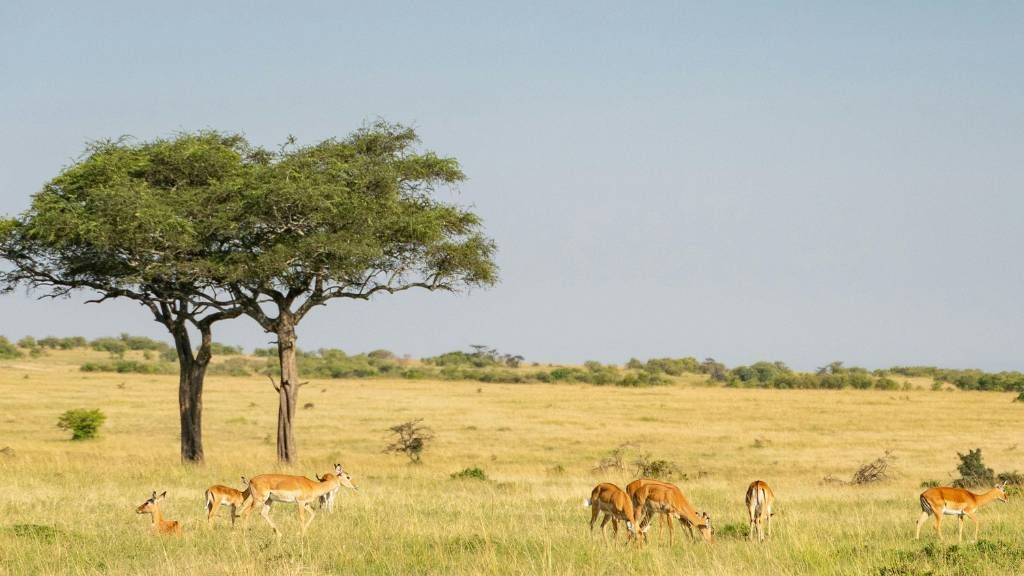
Animals can actively change the environment
Some animals bring about major changes to the physical environments in which they live. For example:
- Termites drastically alter soil, creating interconnected tunnels and air columns above ground with mounds that can reach 2.5 meters in height.
- Beavers build dams that change water flow in freshwater streams. They also cut down trees, gaining access to sunlight.
- Earthworms process nitrogen-related compounds in soil, increasing soil aeration and water drainage while creating underground tunnel networks.
- Walruses, in hunting clams, disturb marine sediments, transforming large areas of the seabed inhabited by invertebrate communities.
- Mollusks, in forming reefs, construct massive underwater structures that obstruct underwater currents and provide shelter for marine life.
Other examples include shrimp, salmon, alligators, bison, corvids, mole rats, pikas, burrowing owls, caddisflies, and mycorrhizal fungi.
Flawed ecosystem engineering concepts
Earlier ecological theories often took a simplified view, assuming that a single dominant species played the key role in shaping a habitat. The concept of ecosystem engineering, however, recognises that many organisms influence their surroundings at the same time in different but interconnected ways. These processes shape the characteristics of a habitat, affect relationships between species within a community, and alter the physical and geological aspects of the environment.2
When considering the relationship between organisms and their physical surroundings, research has shown that animals are not merely passive entities shaped by non-living geological forces. Rather, they actively explore, settle in, and adapt to new and changing habitats.4
Ecosystem engineering analysis wrongly attributes a form of intelligence comparable to human reasoning to organisms such as earthworms and bacteria. The term itself is misleading, as it suggests that animals deliberately and creatively modify their environments, much like engineers. However, the remarkable complexity seen in nature is not a product of animal ingenuity but a reflection of God’s wisdom in creation.
Conclusion
By disregarding God’s purpose in creating the Earth and all living beings, ecosystem engineering analysis offers an incomplete perspective. Its explanations fail to grasp the deeper reality of nature’s design. Attempting to study God’s creation without reference to Scripture is like trying to put together a 5,000-piece puzzle without the reference image on the box.2
By the way, we recommend reading the articles:
- The Relationship Between Theistic Evolutionism and Death
- Natural Selection – Truth or Fiction?
- Why Were Extinct Trees the Most Complex?
- Where Are the Fulgurites from Millions of Years Ago?
- Were Dinosaurs Cold-Blooded?
Footnotes
- Jones, C. G., Lawton, J. H. and Shachak, M. 1994. ‘Organisms as Ecosystem Engineers’, Oikos, 69, pp. 373-386.
- Wright, J. and Jones, C. G. 2006. ‘The Concept of Organisms as Ecosystem Engineers Ten Years On: Progress, Limitations, and Challenges’, BioScience, 56(3), pp. 203-209.
- Johnson, J. J. S. 2010. ‘Misreading Earth’s Groanings: Why Evolutionists and Intelligent Design Proponents Fail Ecology 101’, Acts & Facts, 39(8), pp. 8-9; Johnson, J. J. S. 2018. ‘Grand Canyon Neighbors: Pines, Truffles, and Squirrels’, Acts & Facts, 47(10), p. 21; Johnson, J. J. S. 2017. ‘Cactus, Bats, and Christmas Gift-Giving’, Acts & Facts, 46(12), p. 21.
- See, for example: Guliuzza, R. J. 2018. ‘Engineered Adaptability: Fast Adaptation Confirms Design-Based Model’, Acts & Facts, 47(9), pp. 18-20; Guliuzza, R. J. 2018. ‘Engineered Adaptability: Sensor Triggers Affirm Intelligently Designed Internalism’, Acts & Facts, 47(2), pp. 17-19.
Compiled from: J. J. S. Johnson, ‘Ecosystem engineering explanations miss the mark’, Acts&Facts, Institute for Creation Research, March 2019, pp. 20-21.
© Source of main image: Canva.

The portal EvolutionOfThinking.org, created by the Research and Education Institute, focuses on education and the dissemination of knowledge related to research on various aspects of human well-being.

