
Flood legends are not exclusive to the Middle East or religious texts; they are found in numerous cultures worldwide. This section delves into the flood myths shared by the Native American tribes of the Grand Canyon region.
The biblical narrative of Noah’s flood is often dismissed by evolutionists as an ancient myth from the Middle East. They contend that a global flood never occurred, suggesting that any significant flooding events might have taken place long before the emergence of humans. The claim that flood myths are restricted to the Middle East, however, is inaccurate. In reality, such legends can be found across diverse regions, including Europe, Asia, Africa, and Australia.
Flood legends are also prevalent among the Native American tribes of North and South America. For instance, the Hualapai and Havasupai tribes, situated in the southwestern United States near the Grand Canyon, also share such stories. To what degree do these legends resemble the biblical narrative?
The Hualapai Legend
The Hualapai, meaning ‘People of the Tall Pines’, inhabit the western part of the Grand Canyon in Arizona, within lands designated for them in 1883. To the west, across Lake Mojave in neighbouring Nevada, stands a mountain peak known as Wikahme or Spirit Mountain. This mountain holds great significance in Hualapai mythology. At its base, petroglyphs etched into the stone depict a narrative of the flood.1
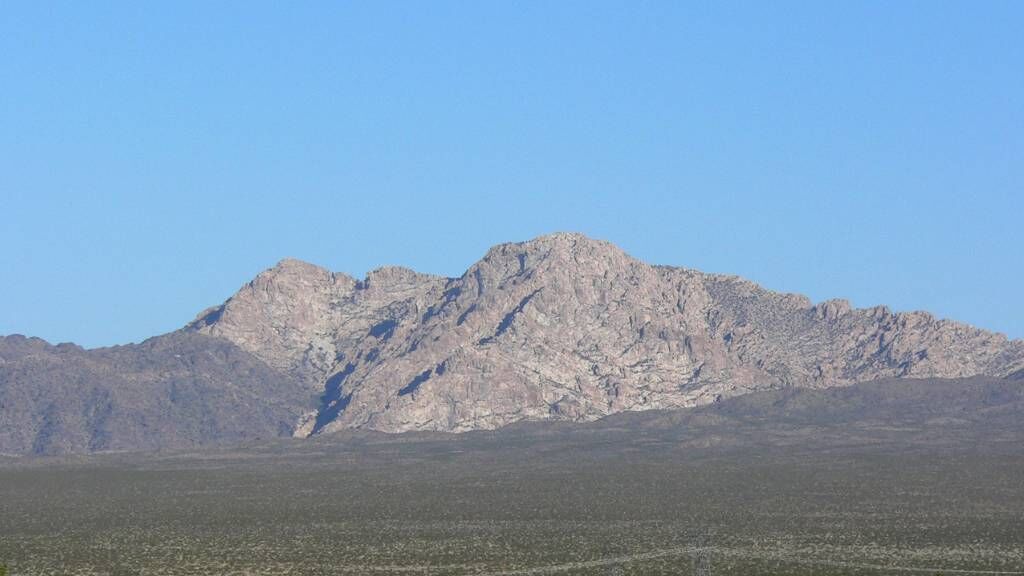
Lucille Watahomigie, a tribal elder, recounts that the floodwaters raged for 45 days, destroying all life on Earth except for one elderly man who sought refuge atop Spirit Mountain. To help the waters subside, the Creator sent a dove to guide the man, instructing him to use a ram’s horn to dig a hole at the base of the mountain. Once the floodwaters receded, the dove returned, carrying a blade of grass in its beak.2 Another petroglyph illustrates a boat with eight survivors, believed to be the ancestors of all humanity. Watahomigie asserts that both the legend and the petroglyphs predate the arrival of Christian missionaries.3
The Havasupai Legend
The Havasupai, meaning ‘People of the Blue-Green Water’, live to the east of the Hualapai tribe, with whom they share a close cultural connection. They reside within lands along the Havasu River, which flows into the Colorado River, the primary watercourse of the Grand Canyon. Today, the Havasupai primarily sustain themselves through tourism, offering tours of the Grand Canyon to visitors.
One version of the Havasupai myth involves two gods: the kind-hearted Tochapa and the malicious Hokomata. Tochapa fathered a daughter, Pu-keh-eh, who was destined to become the mother of all humanity. Disapproving of this, Hokomata sent a flood to halt the Earth’s population. Tochapa then felled a tree and hollowed its trunk to offer shelter to Pu-keh-eh. As the floodwaters subsided, rivers emerged, one of which is believed to have carved the Grand Canyon.4 In another variation of the myth, people already inhabited the Earth before the flood, which ultimately destroyed them. In this version, an indigenous healer prepared the hollow tree trunk to protect the girl and the animals.5
A Comparative Analysis
Comparing both legends to the biblical flood narrative reveals several striking similarities. In each account, the flood is portrayed as a global event, likely affecting the plateau where the Grand Canyon is located. All three stories depict the destruction of humanity, with only a small group of survivors remaining. These survivors are saved by a vessel that floats atop the floodwaters.
The Hualapai legend contains three particularly notable elements. Firstly, it depicts a dove carrying a plant in its beak, symbolising the receding floodwaters, which mirrors the biblical account. Secondly, the legend mentions 45 days of rainfall, which is strikingly similar to the 40 days described in the Bible.6 Lastly, the survivors of the flood include eight individuals, in addition to the man on Spirit Mountain, closely reflecting the number found in the biblical story.7
Conclusion
What could explain the striking similarities, as well as the differences, between the biblical flood narrative and the flood myths of two Native American tribes from distant parts of the world? One possible explanation is that a global flood truly occurred. The differences in the stories may be the result of memory of the flood fading over time as human groups dispersed, with local influences shaping the retelling of the event. Despite these variations, certain core elements of the original story have remained intact. Interestingly, the myths also link the formation of the Grand Canyon to the flood, a view that aligns with the findings of creationist scientists who study this natural phenomenon from a scientific perspective.
By the way, we recommend reading the articles:
- More Than One Genetic Code?
- Phenotypic Plasticity – A Rapid Form of Evolution?
- Viking Bones and Radiocarbon Dating
- The Fermi Paradox – Where Are They?
- Göbekli Tepe – A Great Mystery for Historians
Footnotes
- Liguori, N. (2021) ‘Flood legends from the Americas, Part 1: Continental United States’, Answers in Genesis, 13 April. Available at: https://answersingenesis.org/the-flood/flood-legends/flood-legends-americas-part-1/.
- Hoesch, W. A. (2008) ‘The Hualapai and the Flood’, Institute for Creation Research, 1 January. Available at: https://www.icr.org/article/hualapai-flood.
- Lyon, J. D. and Hoesch, B. (2015) ‘Flood tales from the canyon’, Answers in Genesis, 1 January. Available at: https://answersingenesis.org/the-flood/flood-legends/flood-tales-canyon/.
- ‘Grand Canyon legend’ (1985) Creation, 7(3), p. 11, March. Available at: https://creation.com/grand-canyon-legend-havasupai-indians.
- Lyon, J. D. and Hoesch, B. (2015) ‘Flood tales from the canyon’, Answers in Genesis, 1 January. Available at: https://answersingenesis.org/the-flood/flood-legends/flood-tales-canyon/.
- The Bible, New King James Version, 1982, Genesis 7:4-6.
- The Bible, New King James Version, 1982, Genesis 7:13; 1 Peter 3:20.
© Source of main image: Canva.

The portal EvolutionOfThinking.org, created by the Research and Education Institute, focuses on education and the dissemination of knowledge related to research on various aspects of human well-being.

