
Israel boasts a wealth of archaeological sites that provide evidence for biblical accounts. This section highlights several significant discoveries from the region of Galilee.
Dan
Tell el-Qadi, the present-day location of the ancient city of Dan, was the northernmost settlement of Israel. After Solomon’s kingdom was divided, King Jeroboam established two key religious centres in the northern kingdom: Dan and Bethel.1 These sites became centres of idolatry, each housing golden calves for worship.
From 1966 onwards, Professor Abraham Biran led excavations at Dan, uncovering well-preserved city gates from the era of the Israelite kings, alongside a family tomb dating to the 14th or 13th century BCE. The tomb contained 45 skeletons, as well as burial artefacts from Mycenae. On the acropolis, archaeologists unearthed a platform measuring 19×18.3 metres, accessible via stairs five metres wide. Pottery from the 9th century BCE found on the platform confirmed it had been used as Jeroboam’s sanctuary for the golden calf.
Hazor
Hazor, situated less than 25 kilometres north of Tiberias along the ancient Via Maris trade route, was a major city, described in the Book of Joshua as the foremost of all the kingdoms.2 Spanning 110 hectares, with the acropolis alone covering 12 hectares, the city was conquered and burned by Joshua. It was later rebuilt and flourished under Solomon’s rule, becoming one of his key fortified cities alongside Megiddo and Gezer.
Professor Yigael Yadin’s excavations, carried out between 1955 and 1970, uncovered evidence that the lower city was inhabited from the 18th to the 13th century BCE. The acropolis, in contrast, saw continuous occupation, with only brief interruptions, from the 17th century BCE until the Hellenistic period. Among the notable finds were Solomon’s fortifications, which included a city gate identical to those discovered at Megiddo and Gezer. Additionally, a complex underground water system, essential during sieges, was also uncovered.
Capernaum
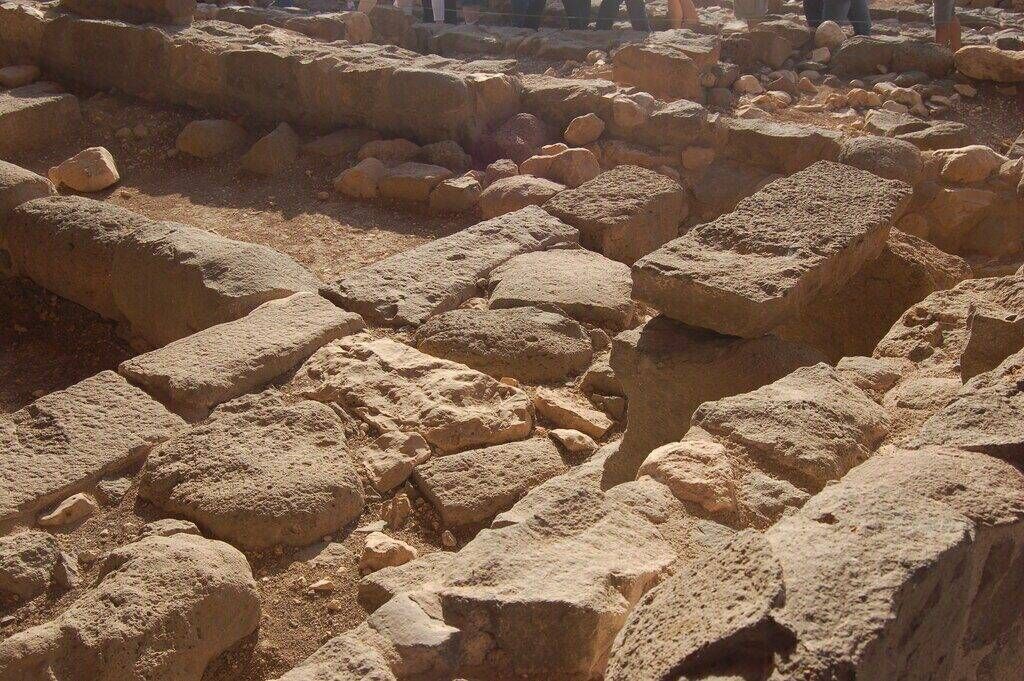
The name Capernaum originates from Kfar Nahum (Village of Nahum). Situated in Galilee, it was the central location for Jesus Christ’s ministry and the residence of Simon Peter. Established in the 13th century BCE, archaeological excavations in Capernaum have uncovered a 1st-century house, which is identified as the home of Peter. The site’s most notable feature is a 4th-century synagogue, built over the foundations of the synagogue where Jesus is believed to have taught. The white limestone of the synagogue stands in sharp contrast to the black basalt used for the construction of nearby residential buildings.
Sepphoris
During the Hasmonean period, Sepphoris was established as the capital of Galilee. After the fall of Jerusalem in 70 CE, many Jews settled in Galilee, and the Sanhedrin moved to Sepphoris, where it remained for 17 years before transferring to Tiberias. It was in Sepphoris that Judah ha-Nasi compiled the Mishnah, the first recorded collection of Jewish oral law.
In Sepphoris, archaeologists uncovered a 3rd-century palace that included a central hall, residential rooms on three sides, and a courtyard with a pool. The most remarkable find was a floor mosaic portraying the Greek god Dionysus, with a portrait of a woman at its centre.
Tiberias
Herod Antipas, son of Herod the Great, founded Tiberias, making it the capital of Galilee in place of Sepphoris. The city quickly became a centre for Jewish scholarship, where much of the Talmud was compiled. Excavations have uncovered the city’s primary north-south street, a Roman bath adorned with fish mosaics, and the remains of a Roman basilica.
Nazareth
Nazareth, where Jesus grew up, is home to two significant churches. The Basilica of the Annunciation, built on the site of earlier Jewish and Christian structures, commemorates the moment when the angel Gabriel announced the news to Mary. St. Joseph’s Church, which is nearby, stands at the traditionally recognised site of Joseph’s workshop. A notable feature of the church is its baptistry, which was used for immersion baptisms.
Mount Tabor
Mount Tabor is first referenced in the Old Testament as the site of Deborah and Barak’s triumph over the king of Hazor.3 It later served as a fortress during the First Jewish Revolt. In the New Testament, it is the mountain on which Jesus’ Transfiguration is said to have occurred.4
Cana of Galilee
The biblical Cana of Galilee is thought to correspond either to Chirbet Qana, where Roman-era settlements have been discovered, or to Kfar Kana, located approximately 7 kilometres from Nazareth. Both sites feature churches—one Roman Catholic and the other Orthodox—that claim to be the place where Jesus performed His first miracle, turning water into wine.
Artifacts and structures found at these locations offer significant support for the historical accuracy of the biblical narrative.
By the way, we recommend reading the articles:
- The Babylonian Exile – A Historically Confirmed Biblical Prophecy
- Saturn’s Rings as Evidence of a Young Solar System
- The Feasibility of Radiocarbon Dating in Dinosaur Fossils
- The Fourth Dimension – Part 1: The Shape of the Universe
- The Fourth Dimension – Part 2: Exploring the Intersection of Science and Spirituality
Footnotes
- The Bible, New King James Version, 1982, 1 Kings 12:28-29.
- The Bible, New King James Version, 1982, Joshua 11:10.
- The Bible, New King James Version, 1982, Judges 4:6.
- The Bible, New King James Version, 1982, Matthew 17:1-8.
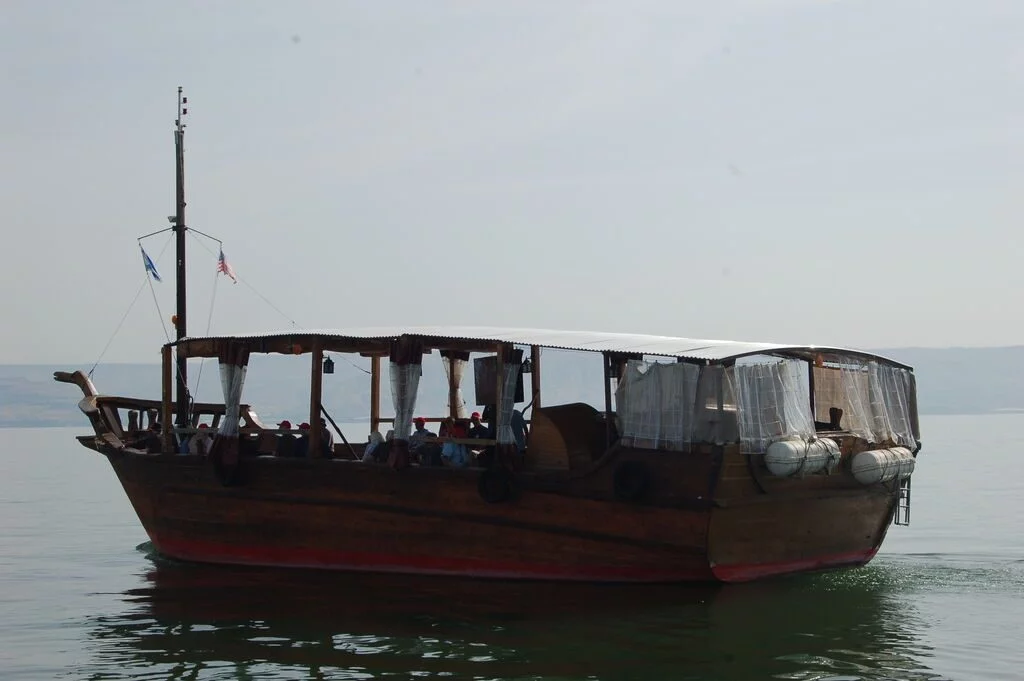
© Main photo: The Sea of Galilee. Author: Bernard Koziróg.

The portal EvolutionOfThinking.org, created by the Research and Education Institute, focuses on education and the dissemination of knowledge related to research on various aspects of human well-being.

