

Why did ancient civilizations use 360-day calendars, excluding the last five days? This choice likely reflects their fascination with the idealized nature of celestial cycles. However, given the significance of these calendars in ancient mythology, there may have been deeper symbolic or cultural motivations behind this structure.
From the earliest moments of recorded history, humans have sought to measure time through the movements of celestial bodies: the Earth, the Moon, the Sun, and distant stars. This quest gave rise to calendars that tracked days, months, and years, as well as intermediate periods such as weeks or decans.1 The problem lies in the fact that natural months and years don’t align. A tropical year2 doesn’t last exactly 12 synodic months3 but 12.37. A single orbit of the Moon around the Earth takes, on average, 29.5 days. As a result, various types of calendars—solar, lunar, and lunisolar—have been used since ancient times.
The modern Gregorian and Julian calendars are solar, based on the tropical year, which averages4 365.242 days, or 365 days, 5 hours, 48 minutes, and 45 seconds. Although both calendars divide the year into 12 months, the number of days per month is not strictly determined by the length of synodic months. In contrast, the Muslim calendar is lunar, based on synodic months rather than the tropical year. As a result, the Gregorian and Julian calendars have 365 or, in leap years, 366 days, while the Muslim calendar consists of 354 or 355 days,5 always comprising 12 synodic months.
Ancient civilizations were aware that a full solar year lasted around 365 days and may have known of leap years. However, the earliest calendars in antiquity seem to have been based on a 360-day year.6 How can this be explained? What is even more striking is that 360-day calendars were not unique to one civilization but were widespread across many ancient cultures. Let us explore the calendars used by different ancient societies.
360 Days in Ancient Calendars
Mesopotamia
In ancient Mesopotamia, where the Sumerians and Babylonians developed their societies, the foundational unit for mathematical calculations was 60 rather than the more familiar 10. This base-60 system was closely linked to Babylonian astronomy and their calendar. The Babylonians divided time into segments of 60—a legacy that endures today as we measure an hour in 60 minutes and a minute in 60 seconds. Similarly, they divided the ecliptic (the Sun’s apparent path across the sky) into 360 degrees, assigning each degree to a day. These 360 days were structured into 12 months of 30 days each, with the remaining five, known as epagomenal days, viewed as supplementary days.7 The ancient Persians also adopted this 360-degree system, aligning it with their own calendar, which initially spanned 360 days.8
Egypt
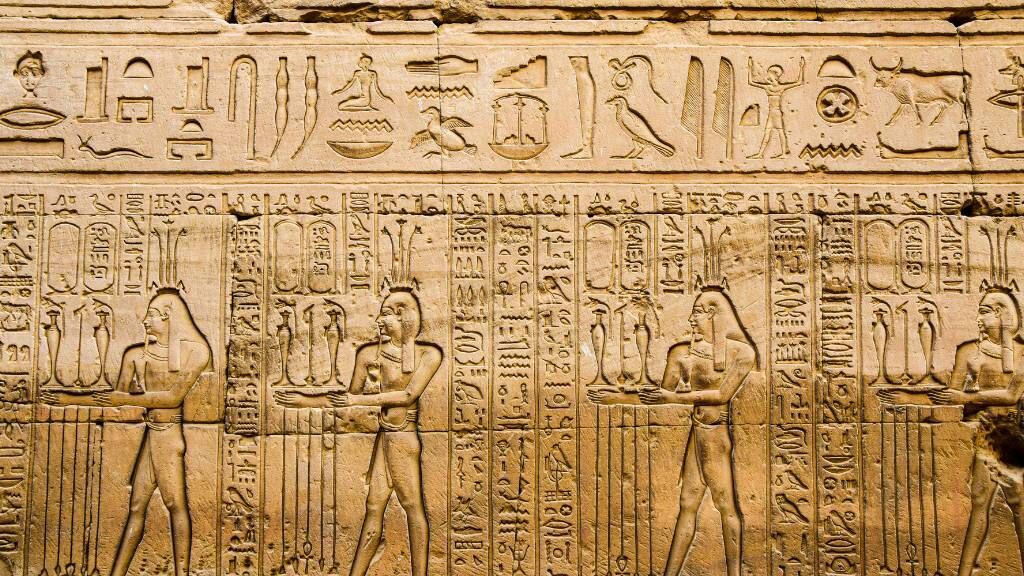
The Egyptians also adopted the Babylonian concept of dividing a circle into 360 degrees. Curiously, their year initially comprised only 360 days, despite their awareness of the true length of the tropical year. An Egyptian myth even addresses the addition of five extra days. In ancient times, when the year supposedly consisted of 360 days, the god Ra cast a spell on Nut, forbidding her from giving birth on any day of the year. However, Thoth devised a clever plan to break the spell. He engaged in a game of senet with Khonsu, the moon god, wagering moonlight. Khonsu lost, forfeiting enough moonlight to create approximately five extra days. Because these days were not officially part of the year, Nut was able to give birth to her children.9 Therefore, Egyptians saw these 5 days as inauspicious and treated them as holidays.10
Israel
In describing Noah’s Flood, the Bible refers to a period of 150 days during which the waters rose. Specific dates are given for the start and end of this period: the 17th day of the second month and the 17th day of the seventh month, respectively. For this interval to total precisely 150 days, it would imply that five months of 30 days each had elapsed between these two dates.11 Additionally, the Bible frequently employs 360-day symbolism, particularly in the Books of Daniel and Revelation, which reference periods of 1,260 days, 42 months, and 3.5 ‘times’ (interpreted as years).12 Some biblical scholars suggest that these periods represent the same prophetic timeframe, proposing that a prophetic year consists of 12 months of 30 days each, amounting to a total of 360 prophetic days.13
India
Ancient Indian tradition also observed a 360-day year. The Indian Vedas depict a calendar divided into 12 months of 30 days each, without any reference to the five intercalary (epagomenal) days. To maintain alignment with the solar year, the Indo-Aryans occasionally added a thirteenth month. The Vedas further describe mythical eras, such as the Golden Age and the Silver Age, each spanning a period divisible by 360.14
Mesoamerica
The calendars of ancient New World civilizations also prominently featured the number 360. The Maya, known for their advanced astronomical and mathematical knowledge, developed a complex and highly accurate calendar system. The number 360 appears in two Mayan calendars: the secular Haab and the Long Count. The Haab divides the year into 365 days, with 12 months of 30 days each, amounting to 360 regular days. The remaining five ‘nameless’ days formed an intercalary month called Wayeb, considered unlucky. The Long Count calendar, on the other hand, comprises five cycles, with the tun cycle containing 18 uinal cycles, each made up of 20 kin (days). Thus, 18 uinal multiplied by 20 kin yields 360 kin—the number of days in one tun.15 This tradition was adopted by the Aztecs, who included a 360-day year in their Sun Stone and also labeled the 5 epagomenal days as cursed and ‘nameless’ (nēmontēmi).16
Why 360 Days?
The examples above, along with others—including ancient Chinese,17 Andean,18 Roman,19 and Arab20 calendars—demonstrate the significance of the number 360 across diverse civilisations and their apparent reluctance to adopt a 365-day year. Why was there such a strong preference for 360 days? The reason likely lies in its mathematical flexibility: 360 is divisible by a wide range of numbers, including 2, 3, 4, 5, 6, 8, 9, 10, 12, 15, 18, 20, 24, 30, 36, 40, 45, 60, 72, 90, 120, and 180. It is the smallest number divisible by almost every integer from 1 to 10, apart from 7. This convenient divisibility may have made 360 an appealing basis for time-keeping, even if it diverged from the actual solar year.
The question lingers: how did so many ancient civilisations, seemingly independently, arrive at the number 360? Was it purely a shared belief in the symmetry of the cosmos, or perhaps a nostalgic link to an imagined golden age? Curiously, some of these calendars remained unchanged for centuries, with revisions occurring as late as the 8th century CE or beyond.21 Why, despite its practical drawbacks, did they cling to a 360-day calendar for so long? This adherence likely reflects the deep religious and mythological importance the calendar held. Since myths often carry a thread of truth, it seems plausible that there may indeed be more behind this ancient fixation with the number 360.
360 Days and Noah’s Flood
For evolutionists, the facts surrounding 360-day calendars present a partially unresolved mystery. However, some researchers take a different perspective. Certain creationist scientists suggest that, in ancient times, the tropical year may indeed have consisted of 360 days. One advocate of this view is Dr Walt Brown, who proposed the hydroplate theory.22 Brown’s mechanism seeks to explain the biblical Flood and may also account for a shift in Earth’s rotational axis by positing a reduction in the planet’s radius. Due to the conservation of angular momentum, a decrease in radius would result in an increase in rotational speed. Brown’s theory further offers an explanation for why the Moon completes its orbit around Earth in approximately 29.5 days, rather than an exact 30 days.
Whether this event actually occurred remains uncertain. These theories are still under discussion, with some creationist scientists, such as Dr. Danny R. Faulkner, disputing the 360-day tropical year theory.23 However, different ancient accounts suggest a firm belief that, in mythical times, the year truly consisted of 360 days—a notion strongly implied in the Bible. Increasing scientific evidence supports the hypothesis of a worldwide Flood, and if a significant change in Earth’s rotational movement could be confirmed, it would provide further indication that the biblical flood indeed took place.
By the way, we recommend reading the articles:
- What Did the Miller-Urey Experiment Actually Prove?
- The Anthropic Principle: Why Does the Universe Accommodate Life?
- The Mythology and Origins of Dragons Across Cultures – Part 1
- Legends of Dragons from Around the World and Their Origins – Part 2
- The Origin of Viruses: Three Possible Variants
Footnotes:
- Deccan – a period of 10 days, just as a week has 7 days.
- Tropical year – the interval between two times when the Earth is in the same place in orbit around the Sun.
- Synodic month – the period between the two new moons.
- “On average” because the length of the tropical year changes every year, and the differences between years are counted in minutes.
- For this reason, the start of the year in the Muslim calendar regresses by 10-11 days every year relative to the tropical year and the Gregorian calendar year based on it. However, in modern times, the Muslim calendar only functions as a religious calendar. Modern Muslim countries use the Gregorian calendar for civil matters.
- Calendars Through the Ages. (n.d.) Other Ancient Calendars. Available at: http://www.webexhibits.org/calendars/calendar-ancient.html.
- 360-Day Year. (n.d.). Available at: https://360dayyear.com/
- Price, M. (2001) ‘Iranian Calendar Systems, History and Origins’, Iran Chamber Society, December. Available at: https://www.iranchamber.com/calendar/articles/calendar_systems_origins.php
- Rosicrucian Egyptian Museum. (n.d.) ‘Deities in Ancient Egypt – Nut’. Available at: https://egyptianmuseum.org/deities-nut.
- Global Egyptian Museum. (n.d.) ‘Epagomenal days’. Available at: http://www.globalegyptianmuseum.org/glossary.aspx?id=148.
- The Bible, New King James Version, 1982, Genesis 7:11, 24; 8:3-4.
- The Bible, New King James Version, 1982, Daniel 7:25; 12:11; Revelation 11:2-3; 12:6,14; 13:5.
- Jewish Roots. (n.d.) ‘A Prophetic Year is 360 Days’. Available at: https://www.jewishroots.net/library/prophecy/daniel/daniel-9-24-27/360-day-prophetic-year.html.
- 360-Day Year, op. cit.
- Smithsonian National Museum of the American Indian. (n.d.) ‘The Calendar System’, Living Maya Time. Available at: https://maya.nmai.si.edu/calendar/calendar-system.
- Jay, N. (n.d.) ‘The Aztec Calendar – Importance, Use and Relevance’, SymbolSage. Available at: https://symbolsage.com/the-aztec-calendar-guide/.
- Chinasage. (n.d.) ‘Chinese Calendars’. Available at: https://www.chinasage.info/calendar/history.html.
- Zuidema, R.T. (2007) ‘The Inca Calendar, the Ceque system, and their interpretation in Exsul Immeritus’, AMS Acta Institutional Research Repository. Available at: https://amsacta.unibo.it/2350/7/Cap2.pdf.
- Plutarch. ‘The Life of Numa, 18:1’, in Parallel Lives. Available at: https://penelope.uchicago.edu/Thayer/E/Roman/Texts/Plutarch/Lives/Numa*.html
- Armstrong, K. (2002) Islam: A Short History. New York: Modern Library, pp. 11, 23.
- Other Ancient Calendars, op. cit.
- Brown, W. (2008) In the Beginning: Compelling Evidence for Creation and the Flood. Center for Scientific Creation. Available at: http://www.creationscience.com/onlinebook/.
- Enyart, B. (2003) ‘On the Caution about the 360-Day Year’, Creation Research Society Quarterly, 50(1), pp. 40-45. Available at: https://kgov.com/files/docs/360-day-year-CRSQ-2013-Enyart.pdf.
© Source of main image: Canva.

The portal EvolutionOfThinking.org, created by the Research and Education Institute, focuses on education and the dissemination of knowledge related to research on various aspects of human well-being.

