
The Bible recognises the existence of slavery as a reality of the historical context it portrays. However, does this acknowledgment imply the Bible’s approval?
The claim that Scripture sanctions slavery often arises from secular and rationalist perspectives, which tend to position themselves as morally superior by asserting that the abolitionist movement—the effort to end slavery—emerged independently of biblical influence. But how accurate is this view, and to what extent might it reflect a misunderstanding of Scripture’s historical and moral context?
Slavery in World History
Slavery is as ancient as human civilization itself. While not every society practiced it, slavery was a pervasive norm in the ancient world, likely affecting nearly all cultures. In Egypt and Mesopotamia, slavery was well established, with the Code of Hammurabi specifying standards for the treatment of enslaved individuals.1 It is well-documented that the Hebrews also engaged in the practice of slavery, as the Torah contains specific regulations concerning the treatment of slaves (further discussed below). Slavery likewise existed among Hindus and Chinese, as well as in the pre-Columbian societies of the Americas.2
Initially, however, slavery was not as widespread as it later became, being largely limited to palace slavery; only the wealthiest could afford to own slaves. This phenomenon gained prominence in ancient Greece and saw an even more significant expansion in Rome. It is estimated that roughly one-quarter of the Roman Empire’s population were slaves, and in Italy, this number may have reached as high as one-third of the population.3 This prevalence stemmed from Rome’s extensive conquests, during which large numbers of people were taken captive and traded as slaves.
Slavery Practiced by Christians
Slavery continued throughout the Middle Ages in various forms. In Christian Europe, feudal systems reduced but did not completely prevent slavery; for instance, Vikings frequently engaged in the slave trade. Meanwhile, in the Islamic world, slavery remained widespread, partly due to regulations in the Quran.4 Arab and Berber pirates, as well as Tatar invaders in what is now Ukraine, also captured and traded slaves extensively.
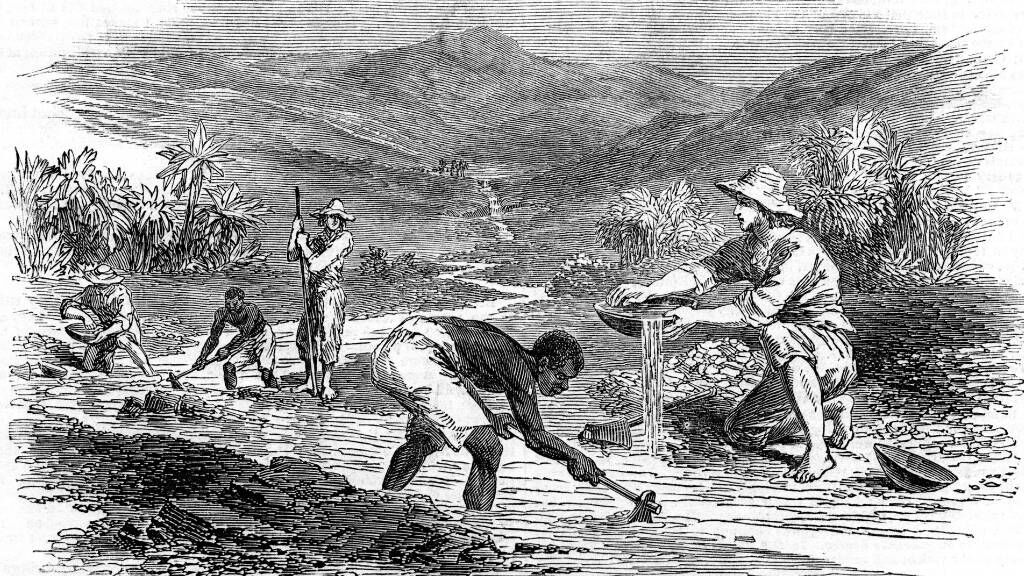
The scale of slavery expanded dramatically with the advent of major geographical discoveries. Europeans, having conquered the New World, inadvertently introduced diseases that devastated Indigenous populations. In Mexico, for instance, the population dropped from approximately 25 million in 1519 to a mere 1.2 million by 1620.5 This catastrophic depopulation was compounded by the brutal conditions and harsh treatment imposed by colonists. Faced with a severe labour shortage, Europeans began importing enslaved Africans to the Americas. Estimates suggest that from 1525 to 1866, approximately 10.7 million Africans were forcibly transported to the New World.6
Voices of opposition arose against both the mistreatment of slaves and the practice of slavery itself. During the conquest of the New World, one of the most influential critics was Bartolomé de las Casas, a Spanish Dominican friar. By the late 18th century, as views shifted and slavery began to be seen as morally indefensible, some nations took action: Denmark banned the slave trade in 1792, and revolutionary France abolished slavery in 1794, though it was later reinstated under Napoleon. Other nations, including the United States in 1865, eventually moved to abolish slavery altogether. Sadly, slavery remains a legal reality in some parts of the world even today.7 The practice of forced labor and human trafficking still continues.
Does the Bible Support Slavery?
This outline is not intended as a complete history of slavery but as an overview. It nonetheless reveals that slavery was prevalent across a vast array of societies, spanning both Christian and non-Christian cultures. In ancient times, slavery was a routine part of life, embedded within social structures regardless of a culture’s religious foundation—whether based on the Bible, the Quran, the Vedas, or other sacred texts. The shift towards the abolition of slavery began only with the influence of Enlightenment ideas in the 18th century.
So, what does the Bible actually say about slavery? While it does recount examples of slavery—such as the Hebrews’ bondage in Egypt—it also includes specific laws meant to regulate how Hebrews were to treat their own slaves. These laws are laid out in various passages, notably in Exodus 21. For instance, verse 26 says, ‘If a man strikes the eye of his male or female servant, and destroys it, he shall let him go free for the sake of his eye’ (Exodus 21:26, NKJV).
A question may arise: if the Holy Scriptures were authored by a merciful God, why did He not abolish slavery outright? A radical measure like this might have been too destabilising, even detrimental, for Israel at the time. Israel frequently faced conflict with neighbouring nations, and capturing prisoners was often a more humane alternative than complete annihilation. Thus, the Torah introduced laws to regulate slavery within Israelite society, offering certain rights to slaves—a marked contrast to the harsh treatment they endured under the Egyptians (Exodus 6:5).
The Real Picture of Slavery in the Bible
It is important to recognize that the Bible did not create or endorse slavery but rather addressed it as a reality of ancient society. Slavery was a recognized part of life in the biblical world. Apostle Paul acknowledged this social context by saying, ‘Let as many bondservants as are under the yoke count their own masters worthy of all honor, so that the name of God and His doctrine may not be blasphemed’ (1 Timothy 6:1, NKJV). Paul also emphasizes the value of personal freedom, ‘Were you called while a slave? Do not be concerned about it; but if you can be made free, rather use it’ (1 Corinthians 7:21, NKJV).
The Bible offers more guidance on how individuals should treat one another than on their social status. This includes passages on the treatment of slaves. For example, Exodus 21:5 states, ‘But if the servant plainly says, “I love my master, my wife, and my children; I will not go out free,”’ (NKJV). This verse implies that a servant might genuinely love their master, suggesting that the master must have treated the servant with kindness, perhaps even affection, as one might show to one’s own family. A similar case is seen in the relationship between Philemon and his servant Onesimus. During a temporary imprisonment with the Apostle Paul, Onesimus converted and became a valuable helper to Paul, who later sent him back to Philemon, writing with deep affection, ‘I am sending him back. You therefore receive him, that is, my own heart,’ (Philemon 1:12, NKJV).
Christian Abolitionism
Regrettably, history reveals that many Christians failed to uphold the principle of loving those in their care. In the Americas, slaves were often regarded as mere possessions by their supposed ‘Christian’ owners. Similarly, in other parts of the world, notably in King Leopold II’s private African colony at the turn of the 19th and 20th centuries, this disregard for compassion and dignity persisted.8 Millions of slaves died at the hands of their masters.
However, these atrocities ultimately fueled the success of the abolitionist movement, leading to the outlawing of slavery in numerous countries. This movement was not solely inspired by Enlightenment values; Christians, too, began to speak out against slavery, drawing upon the teachings of the Bible. The Quakers were among the first to do so in the 17th century. By the 18th century, the Christian abolitionist movement had intensified, particularly in Britain and its American colonies, which would later become the United States.9 The central reason lay in the biblical belief that all people are equal in the eyes of God. While resistance to abolitionism continued—leading, among other consequences, to the Civil War—the movement’s progress ultimately could not be halted.
Conclusion
Does the Bible justify slavery? Certainly not. It simply addresses its existence, focusing on the ethical treatment of others, including those in servitude. Moreover, it is inaccurate to attribute the abolition of slavery solely to the rationalist Enlightenment; Christians themselves identified compelling biblical grounds to oppose and work toward ending slavery.
By the way, we recommend reading the articles:
- Did Kangaroos Evolve in Australia?
- Which Came First: The Flood or the Pyramids?
- Axis of Evil – Could It Overturn the Big Bang Theory?
- Göbekli Tepe – A Great Mystery for Historians
- The Anthropic Principle: Why Does the Universe Accommodate Life?
Footnotes
- Timmons, G. (2019). Hammurabi. Biography. Available at: https://www.biography.com/political-figures/hammurabi.
- Encyclopaedia Britannica. Slavery: Historical survey. Available at: https://www.britannica.com/topic/slavery-sociology/Historical-survey.
- Bradley, K. (2011). Resisting Slavery in Ancient Rome. BBC History. Available at: https://www.bbc.co.uk/history/ancient/romans/slavery_01.shtml.
- The Religion of Peace. Quran on Slavery. Available at: https://www.thereligionofpeace.com/pages/quran/slavery.aspx.
- McCaa, R. The Peopling of Mexico from Origins to Revolution. Available at: https://users.pop.umn.edu/~rmccaa/mxpoprev/cambridg3.htm.
- Crawford, A. (2020). A massive new database will connect billions of historic records to tell the full story of American slavery. Smithsonian Magazine, January. Available at: https://www.smithsonianmag.com/history/massive-new-database-connect-billions-historic-records-tell-full-story-american-slavery-180973721/.
- Elks, S. (2020). Slavery is still legal in 94 countries – how can we change that? World Economic Forum. Available at: https://www.weforum.org/agenda/2020/02/slavery-not-a-crime-in-half-the-countries-of-world-new-research/.
- Bobineau, J. (2022). Retracing Belgium’s dark past in the Congo, and attempts to forge deeper ties. The Conversation. Available at: https://theconversation.com/retracing-belgiums-dark-past-in-the-congo-and-attempts-to-forge-deeper-ties-184903.
- Reddie, R. (2007). Atlantic slave trade and abolition. BBC Religions. Available at: https://www.bbc.co.uk/religion/religions/christianity/history/slavery_1.html.
© Source of main image: Canva.

The portal EvolutionOfThinking.org, created by the Research and Education Institute, focuses on education and the dissemination of knowledge related to research on various aspects of human well-being.

